

Aron Belka: La persistencia de lo visible
Entre retratos, paisajes e intervenciones sobre imágenes preexistentes, la obra de Aron Belka parece guiada por una misma pregunta: qué permanece ante nuestros ojos cuando la memoria comienza a transformar aquello que creíamos haber visto con claridad.
Hay artistas que pintan aquello que tienen delante de los ojos. Otros pintan aquello que recuerdan. La diferencia parece sutil, pero transforma por completo la naturaleza de una imagen. En la pintura de Aron Belka, las cosas nunca aparecen del todo fijadas. Un rostro emerge de una superficie de color y parece debatirse entre la presencia y la desaparición. Una casa blanca permanece sola frente a la inmensidad de un valle. Un barco atraviesa la niebla mientras el agua, el aire y la propia pintura amenazan con absorberlo. Incluso cuando trabaja desde lugares específicos —las costas de Nueva Inglaterra, los paisajes de Escocia o los retratos de personas concretas— la sensación es siempre la misma: aquello que observamos continúa transformándose ante nuestros ojos.
Conocí a Belka hace muchos años en Nueva York. Había ganado un concurso para intervenir un espacio público de la ciudad y trabajaba en un gran mural cuando nuestros caminos se cruzaron. Desde entonces he seguido su trayectoria con interés, observando cómo su obra transitaba entre el retrato, la figura humana, el paisaje y la pintura de observación. Los temas han cambiado. Los lugares también. Sin embargo, hay una constante que atraviesa silenciosamente toda su producción: la búsqueda de aquello que permanece visible mientras todo lo demás comienza lentamente a disolverse.
chatham pier trawler
Su más reciente exposición, Maritime Patterns, presentada en la William Scott Gallery en Provincetown Massachusetts, confirma esa persistencia. Aunque el mar, las embarcaciones y las costas ocupan el centro de estas pinturas, la verdadera materia de la exposición parece ser otra. No se trata únicamente de representar un territorio, sino de registrar la huella que ese territorio deja en la memoria.
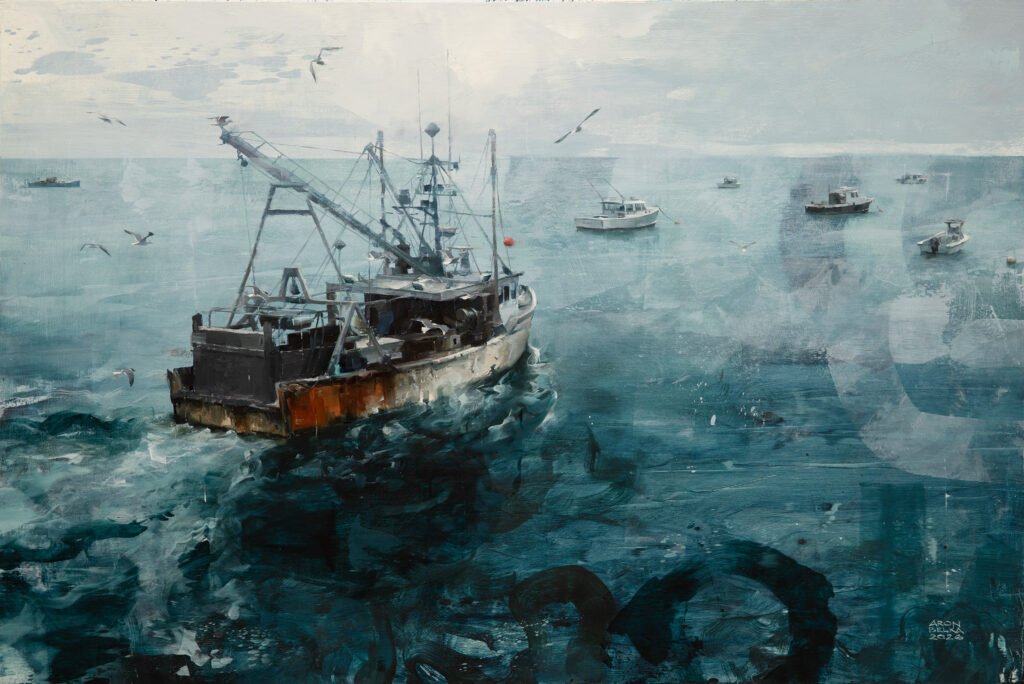
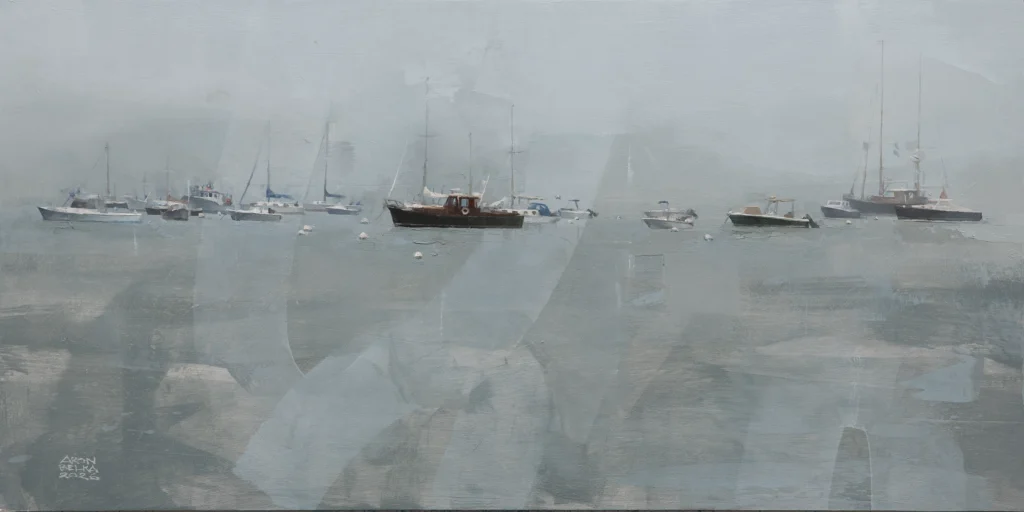
Obras como Chatham Pier Trawler, Misty Gray o Islet Patterns parten de referentes reconocibles. Hay barcos, muelles, islas y horizontes. Sin embargo, la pintura nunca se limita a describirlos. Las formas aparecen envueltas en veladuras, transparencias y atmósferas cambiantes que parecen situarlas en un espacio intermedio entre la observación y el recuerdo. En la densidad marina de Chatham Pier Trawler, por ejemplo, el vaivén del barco queda suspendido bajo unos trazos circulares en el cielo que sugieren patrones de viento o de tiempo; lo mismo ocurre en la quietud brumosa de Misty Gray, donde una hilera de botes se difumina en el silencio del horizonte. Lo que vemos no es simplemente un paisaje. Es la experiencia de haberlo visto.
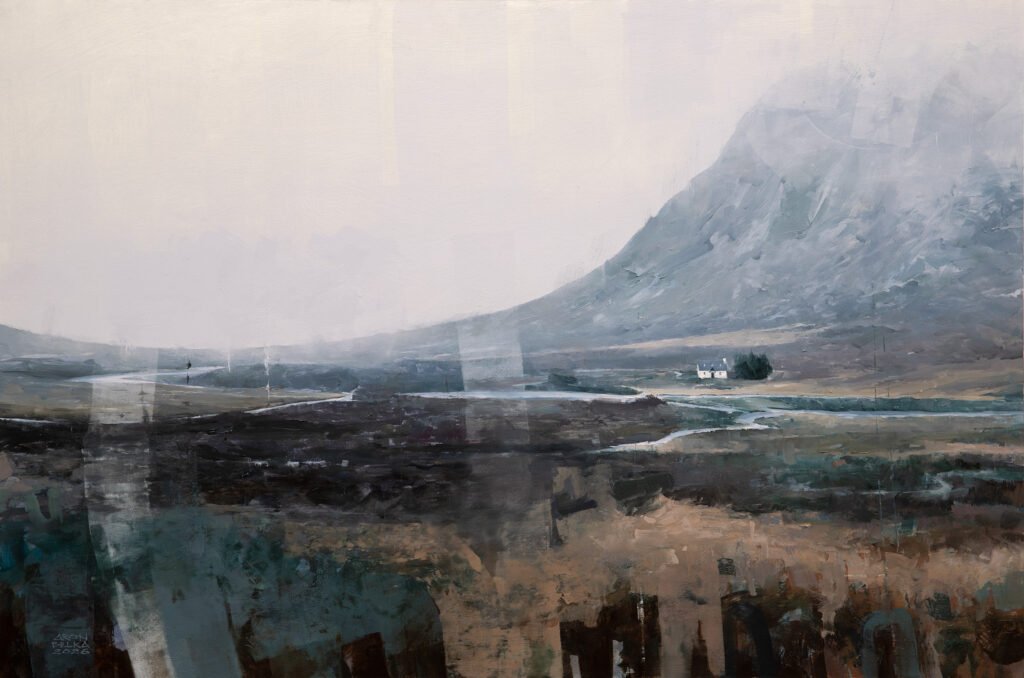
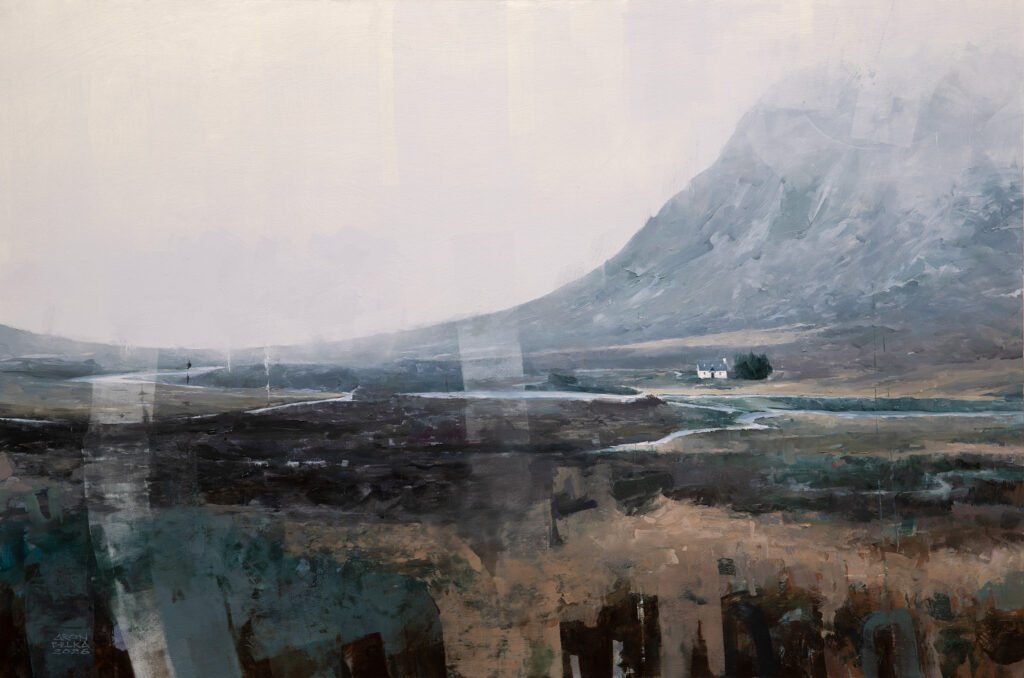
Algo semejante ocurre en los paisajes escoceses de Glencoe Cottage y Glencoe #2. La pequeña construcción blanca que ocupa el centro de las composiciones adquiere una presencia inesperada frente a la inmensidad del entorno. No domina el paisaje; apenas lo habita. Y precisamente por eso se convierte en el núcleo emocional de la imagen. Como sucede en gran parte de la obra de Belka, la fragilidad parece poseer más fuerza que la monumentalidad.
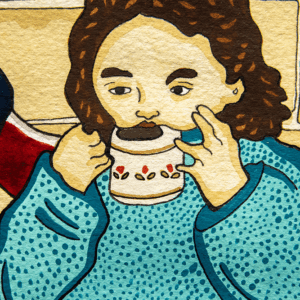
Esta preocupación no es nueva. Quien conozca su trayectoria reconocerá la misma sensibilidad en sus retratos. Allí los rostros no aparecen construidos desde la precisión fotográfica ni desde el afán descriptivo. Emergen lentamente de la pintura, como si fueran recuerdos que todavía conservan suficiente intensidad para permanecer ante nosotros. Los ojos, casi siempre, funcionan como puntos de anclaje. Todo lo demás parece fluctuar alrededor de ellos.
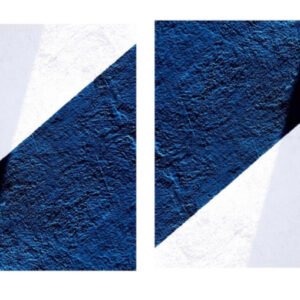
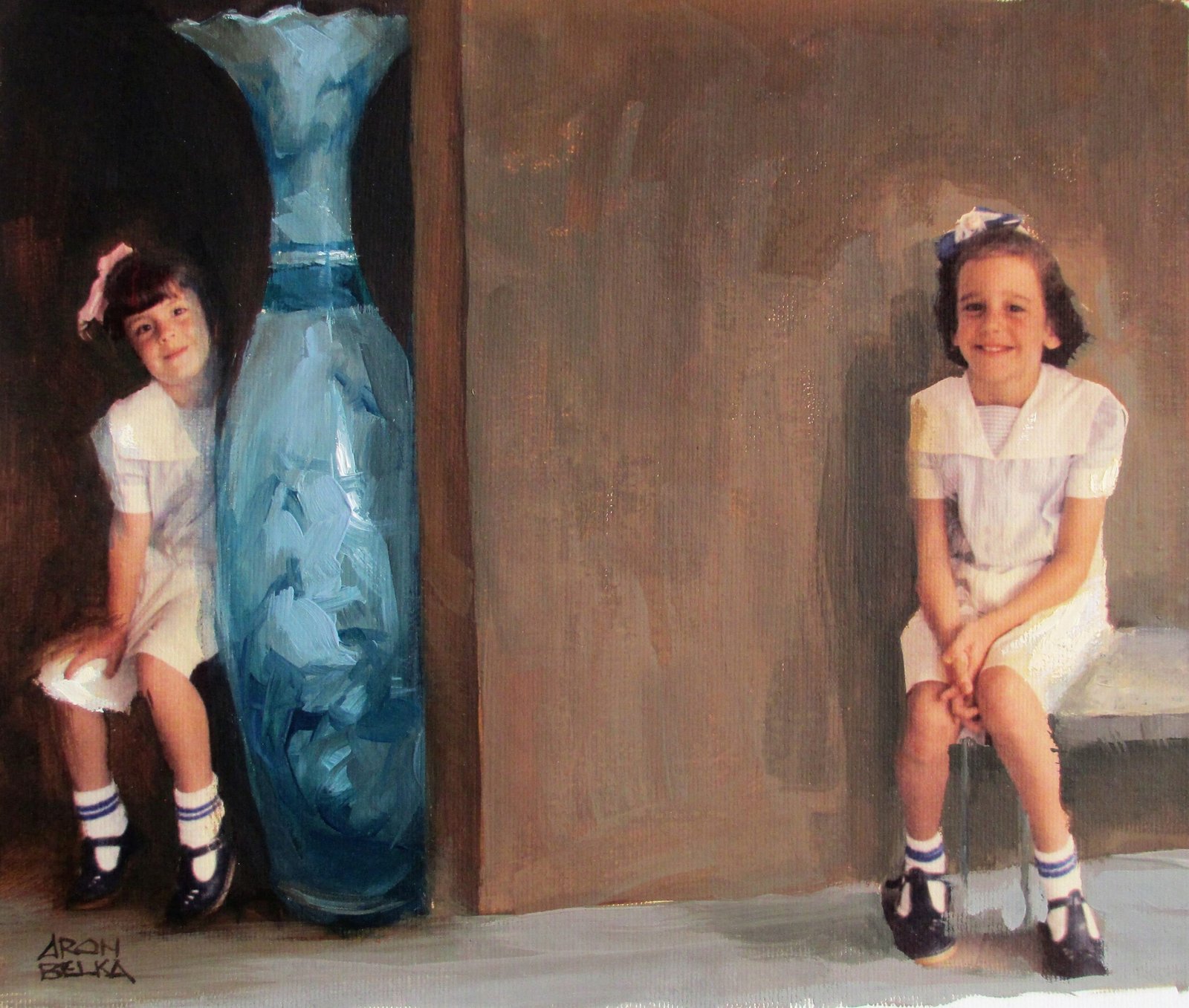
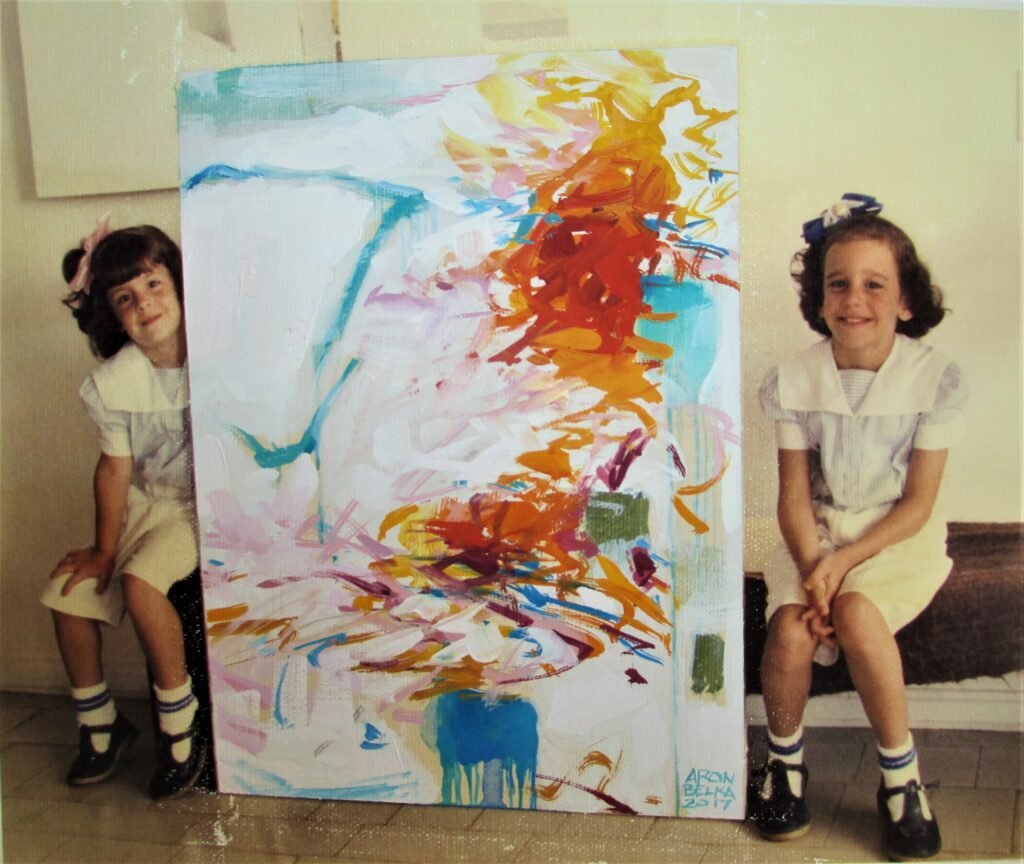
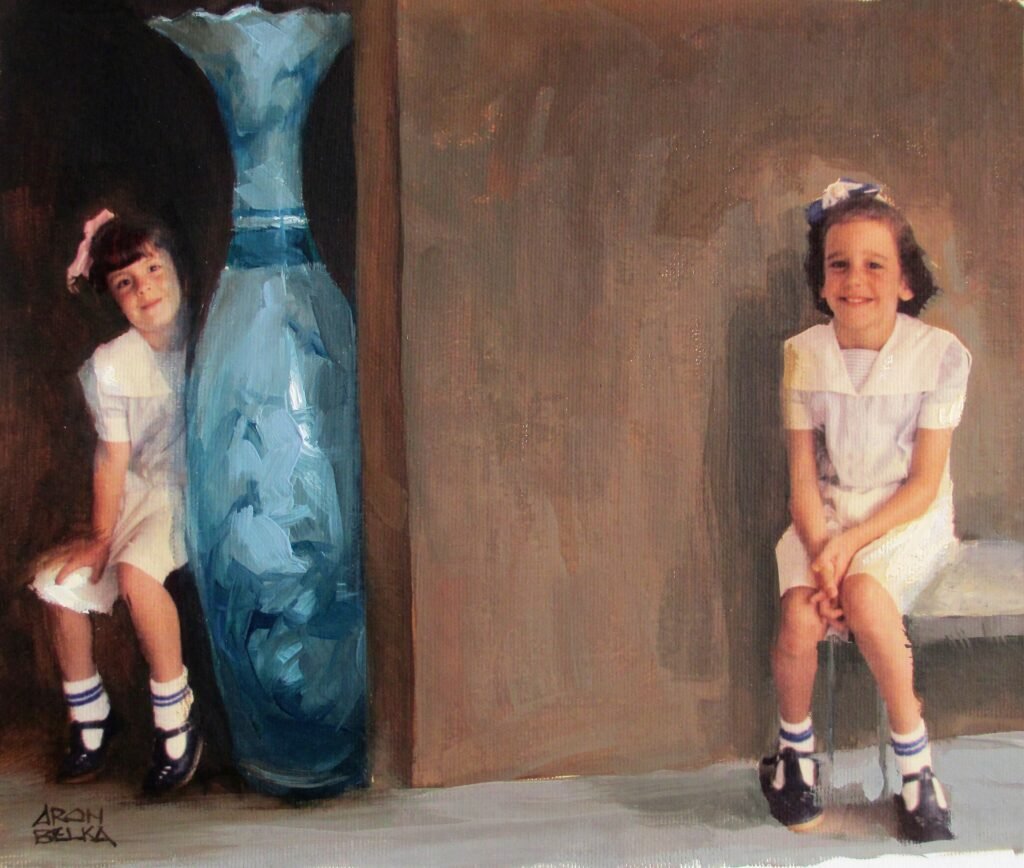
Incluso en trabajos alejados del retrato tradicional, esa lógica permanece intacta. Hace algunos años Belka realizó dos intervenciones sobre una fotografía que forma parte de un proyecto personal que he desarrollado durante décadas. En ambas obras decidió establecer un diálogo con la historia de la pintura. En una de ellas evocó la célebre atmósfera de John Singer Sargent, introduciendo una gran vasija azul que recupera los tonos oscuros, el misterio y el espíritu de la pintura: Las hijas de Edward Darley Boit. En la otra, rindió homenaje a Joan Mitchell como mujer y creadora. Lo definitivo en estas piezas no era la cita. Era la decisión de transformar sin borrar. Añadir sin sustituir. Hacer visible una nueva lectura sin destruir la anterior.
Quizás sea precisamente esa capacidad la que otorga coherencia a toda su producción. Belka parece menos interesado en fijar el mundo que en acompañar sus transformaciones. Sus pinturas no buscan inmovilizar una imagen; buscan preservar una presencia. Por eso sus retratos poseen atmósfera y sus paisajes parecen tener personalidad. Por eso una casa, un barco o un rostro pueden ocupar el mismo lugar emocional dentro de su pintura.
En tiempos dominados por la velocidad de las imágenes y la necesidad constante de producir novedades, la obra de Aron Belka propone algo distinto: una mirada paciente sobre aquello que permanece. No sobre lo permanente, sino sobre aquello que continúa siendo visible mientras el tiempo, la memoria y la experiencia modifican lentamente sus contornos.
Tal vez por eso sus pinturas producen una sensación tan particular. No parecen mostrarnos algo que acaba de aparecer ante nuestros ojos. Más bien nos recuerdan algo que ya conocíamos y que, de alguna manera, continúa acompañándonos.
misty+gray+extended
misty+gray+extended
Aron Belka: The Persistence of the Visible
Between portraits, landscapes, and interventions on preexisting images, Aron Belka’s work seems guided by a single question: what remains before our eyes when memory begins to transform what we once believed we had seen clearly.
There are artists who paint what lies before their eyes. Others paint what they remember. The distinction may seem subtle, yet it completely transforms the nature of an image. In Aron Belka’s painting, things never appear entirely fixed. A face emerges from a field of color and seems to hover between presence and disappearance. A white house stands alone against the vastness of a valley. A boat moves through the fog while water, air, and the paint itself threaten to absorb it. Even when working from specific places—the coasts of New England, the landscapes of Scotland, or portraits of particular individuals—the sensation remains the same: what we are looking at continues to change before our eyes.
I first met Belka many years ago in New York City. He had won a competition to create an intervention in a public space and was working on a large mural when our paths crossed. Since then, I have followed his career with interest, observing how his work has moved between portraiture, the human figure, landscape, and observational painting. The subjects have changed. The places as well. Yet one constant quietly runs through his entire body of work: the search for what remains visible while everything else slowly begins to dissolve.
glencoe cottage
His most recent exhibition, Maritime Patterns, presented at the William Scott Gallery in Provincetown Massachusetts, confirms that persistence. Although the sea, boats, and coastlines occupy the center of these paintings, the true subject of the exhibition seems to be something else. It is not merely about representing a place, but about recording the trace that place leaves behind in memory.
Works such as Chatham Pier Trawler, Misty Gray, and Islet Patterns begin with recognizable references. There are boats, piers, islands, and horizons. Yet the paintings never settle for description. Forms appear wrapped in veils, transparencies, and shifting atmospheres that place them somewhere between observation and recollection. In the marine density of Chatham Pier Trawler, for example, the movement of the vessel seems suspended beneath circular marks in the sky that evoke patterns of wind or weather. Something similar occurs in the mist-filled stillness of Misty Gray, where a row of boats gradually dissolves into the silence of the horizon. What we see is not simply a landscape. It is the experience of having seen it.
A similar dynamic unfolds in the Scottish landscapes Glencoe Cottage and Glencoe #2. The small white structure at the center of each composition acquires an unexpected presence against the immensity of its surroundings. It does not dominate the landscape; it merely inhabits it. And precisely for that reason, it becomes the emotional core of the image. As in much of Belka’s work, fragility seems to possess greater force than monumentality.
This concern is not new. Anyone familiar with his trajectory will recognize the same sensibility in his portraits. Faces are not constructed through photographic precision or descriptive accuracy. They emerge gradually from the paint, like memories that still retain enough intensity to remain before us. The eyes, almost always, function as points of anchorage. Everything else seems to fluctuate around them.
Even in works far removed from traditional portraiture, this logic remains intact. Several years ago, Belka created two interventions based on a photograph that forms part of a personal project I have been developing for decades. In both pieces, he chose to establish a dialogue with the history of painting. In one, he evoked the celebrated atmosphere of John Singer Sargent, introducing a large blue vessel that recalls the dark tonalities, mystery, and spirit of The Daughters of Edward Darley Boit. In the other, he paid tribute to Joan Mitchell as both woman and creator. What mattered most in these works was not the reference itself. It was the decision to transform without erasing. To add without replacing. To make a new reading visible without destroying the previous one.
Perhaps it is precisely this capacity that gives coherence to his entire body of work. Belka seems less interested in fixing the world than in accompanying its transformations. His paintings do not seek to immobilize an image; they seek to preserve a presence. That is why his portraits possess atmosphere and his landscapes seem to have personality. That is why a house, a boat, or a face can occupy the same emotional space within his painting.
In an age dominated by the speed of images and the constant demand for novelty, Aron Belka’s work proposes something different: a patient gaze upon what remains. Not upon what is permanent, but upon what continues to be visible while time, memory, and experience slowly alter its contours.
Perhaps that is why his paintings produce such a particular sensation. They do not seem to show us something that has just appeared before our eyes. Rather, they remind us of something we already knew and that, in one way or another, continues to accompany us.

Cesar Sasson
Magíster en Curaduría de Arte
coleccionsasson@gmail.com
@coleccionsasson
Ciudad de Panamá – Panamá
Mayo 2026