

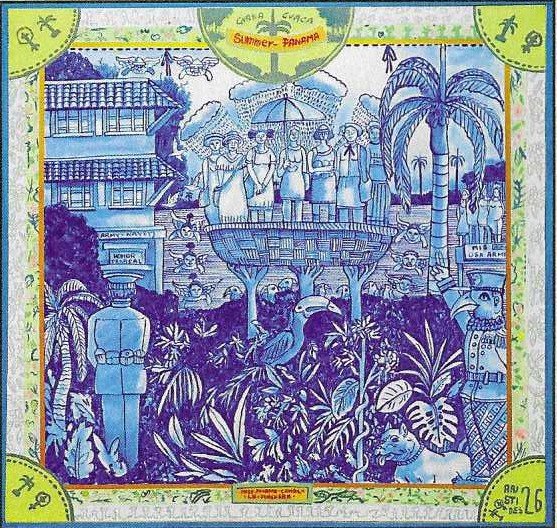
MISS-PANAMA-CANAL-2026.
Entre el azul de la memoria y el rojo del deseo
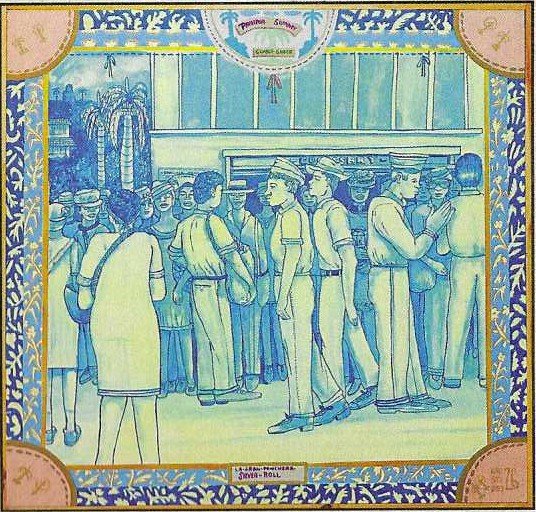
Arístides Ureña Ramos
ZONE TRANSITING -2026-
En Ensueños, Arístides Ureña Ramos y Momo Magallón regresan a la memoria de la antigua Zona del Canal desde dos lenguajes y dos generaciones distintas, allí donde historia, consumo y deseo continúan dejando sus huellas.
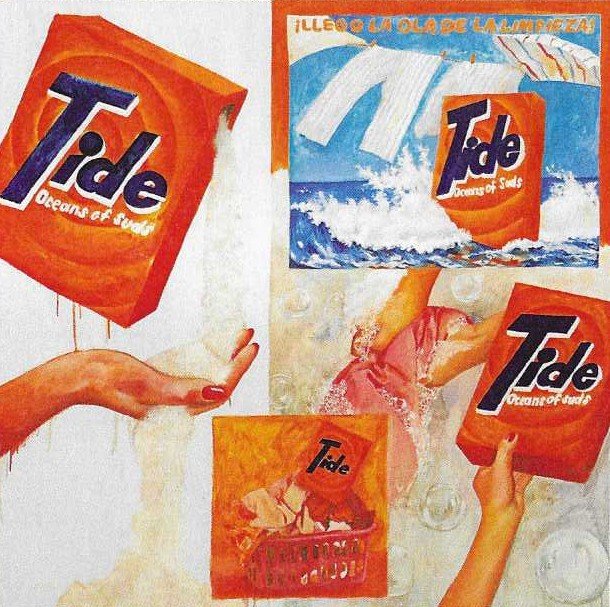
Momo Magallón
A LO BUENO PONGALE LO MEJOR, 2026.
Hay exposiciones en las que el diálogo entre artistas nace de la semejanza; en otras, es precisamente la distancia la que permite el encuentro. Ensueños, que reúne las obras de Arístides Ureña Ramos y Momo Magallón, pertenece a estas últimas. Dos generaciones y dos lenguajes visuales diferentes regresan a la memoria de la antigua Zona del Canal para interrogar no solamente aquello que ocurrió, sino las formas en que ese pasado continúa habitando el presente.
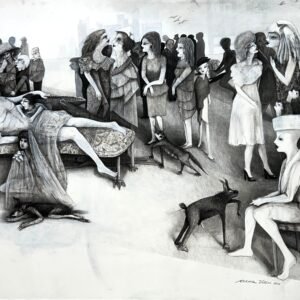
En las obras de Ureña Ramos, la historia aparece sumergida en una particular atmósfera azul. Es un azul que por momentos se desplaza hacia el verde y que parece colocar las imágenes a cierta distancia, como si las observáramos a través del filtro de la memoria. Comisariatos, trabajadores, arquitectura, vegetación y escenas de la vida cotidiana reaparecen transformados en territorios donde documento e imaginación dejan de ser fácilmente separables.
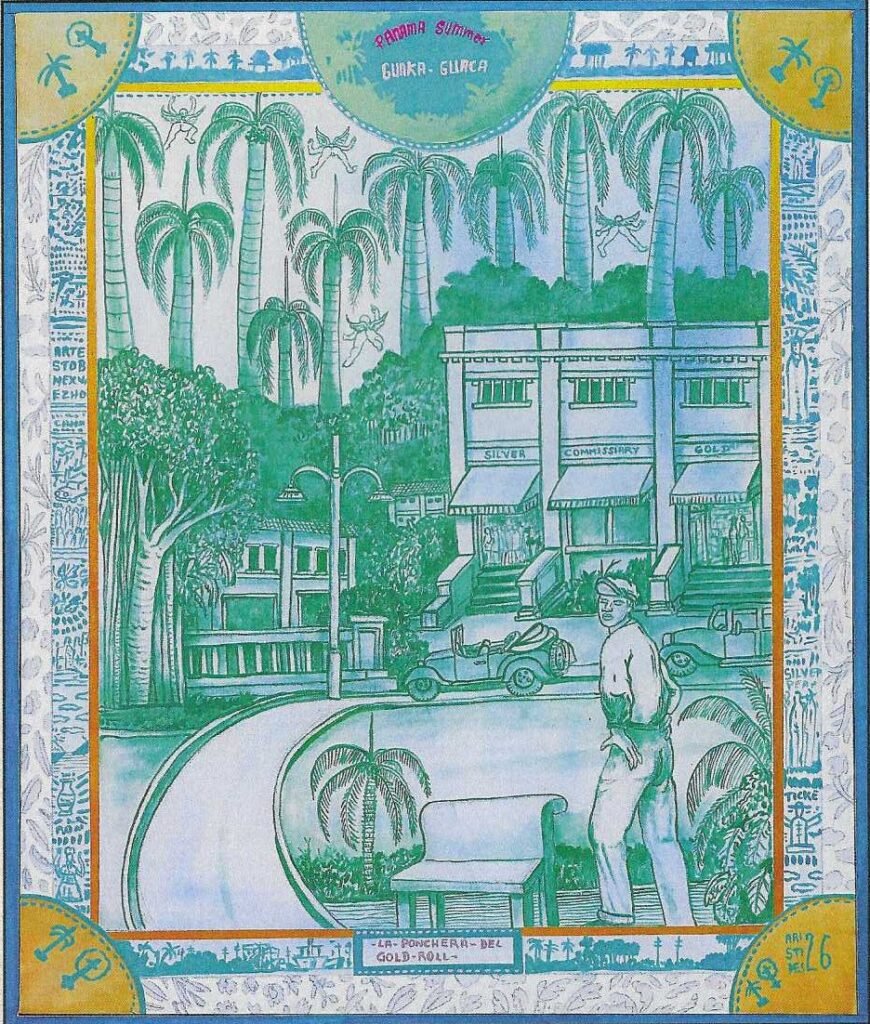
Arístides Ureña Ramos
LOS POBLADORES DE LOS PUEBLOS EN TORNO A LOS COMISARIATOS-2026
El artista no reconstruye literalmente la Zona del Canal. La reinventa. Dentro de composiciones minuciosamente pobladas conviven referencias históricas, personajes, símbolos y elementos fantásticos. Incluso Neptuno regresa encadenado para recordarnos una imagen desaparecida y, con ella, las representaciones de poder que acompañaron la presencia estadounidense en el istmo. El pasado adquiere así una condición casi onírica: reconocible y extraño al mismo tiempo.
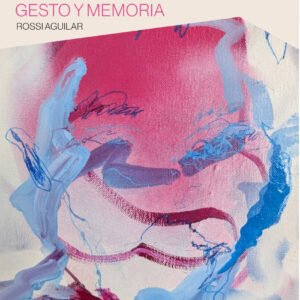
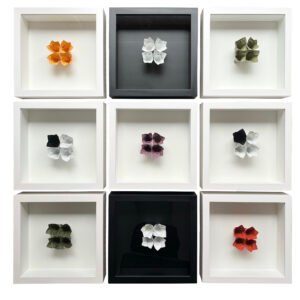
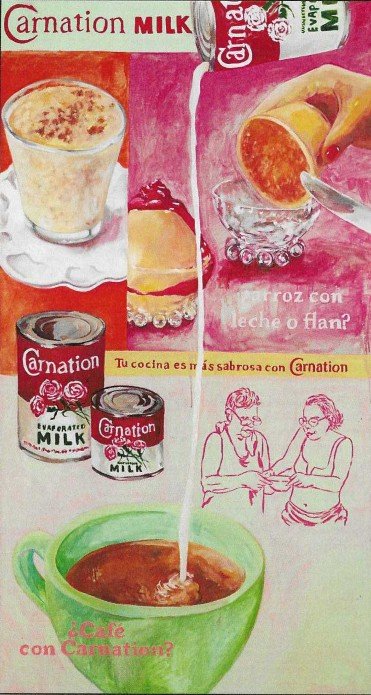
Momo Magallón realiza prácticamente el movimiento contrario. Frente a esa memoria azulada aparece el rojo del deseo: Heinz, Tide, Carnation; envases, alimentos, mercancías y publicidad. El colonialismo deja entonces de manifestarse únicamente como territorio, arquitectura o estructura política y penetra en un espacio mucho más íntimo: lo que se desea, se compra, se come y se consume. La mercancía ya no es solamente un objeto; se convierte en promesa y aspiración.
Esta mirada introduce una dimensión particularmente reveladora. Los sistemas de poder no se construyen únicamente mediante fronteras, leyes o arquitecturas; también penetran en la vida cotidiana a través de aquello que se aprende a desear. Productos asociados a aquel universo de los comisariatos terminaron formando parte de un imaginario de abundancia y modernidad que sobrevivió a las propias estructuras que los hicieron posibles.
Hay todavía otro elemento que prolonga inteligentemente el discurso de la exposición: su pequeño catálogo. El papel, la tipografía, las ilustraciones y la composición gráfica producen deliberadamente la sensación de tener entre las manos un documento encontrado, un viejo periódico o un folleto comercial rescatado de otra época. El catálogo deja así de ser únicamente el registro de la muestra para incorporarse a ella: también él se convierte, de alguna manera, en un objeto de memoria.
Entre el azul de Ureña y el rojo de Magallón aparece entonces el verdadero territorio de Ensueños. No se trata únicamente de recordar la Zona del Canal, sino de preguntarse cuánto de ella permanece todavía latente en la sociedad panameña: en las imágenes heredadas, en los hábitos, en las mercancías y, sobre todo, en los contornos de sus propios deseos.
El pasado, parece sugerir la exposición, nunca permanece completamente en el pasado.
Between the Blue of Memory and the Red of Desire
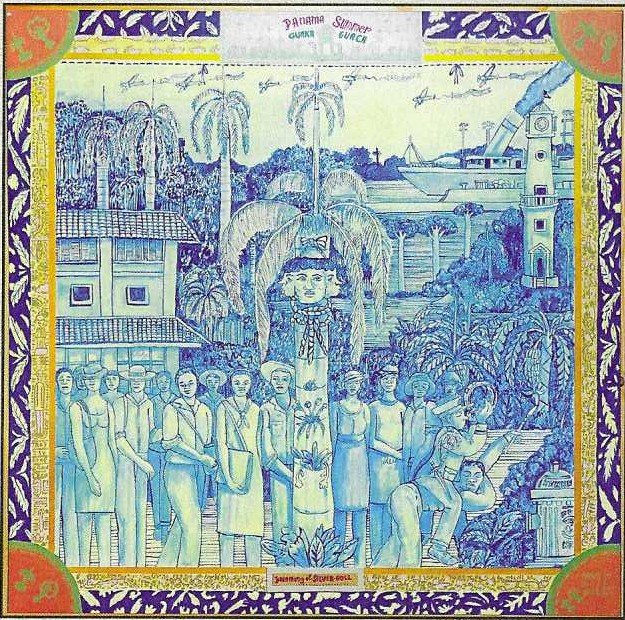
Arístides Ureña Ramos
DREAMING OF SILVER ROLL
In Ensueños, Arístides Ureña Ramos and Momo Magallón return to the memory of the former Canal Zone through two distinct languages and from two different generations, exploring a territory where history, consumption, and desire continue to leave their traces.
Momo Magallón
EL INGREDIENTE SECRETO DE ABI, 2026.
There are exhibitions in which the dialogue between artists arises from similarity; in others, it is precisely distance that makes the encounter possible. Ensueños, which brings together the works of Arístides Ureña Ramos and Momo Magallón, belongs to the latter. Two generations and two different visual languages return to the memory of the former Canal Zone to examine not only what happened there, but also the ways in which that past continues to inhabit the present.
In Ureña Ramos’s works, history appears immersed in a distinctive blue atmosphere. It is a blue that at times shifts toward green and seems to place the images at a certain distance, as though we were observing them through the filter of memory. Commissaries, workers, architecture, vegetation, and scenes of everyday life reappear transformed into territories where document and imagination can no longer be easily separated.
The artist does not literally reconstruct the Canal Zone. He reinvents it. Within meticulously populated compositions, historical references, characters, symbols, and fantastical elements coexist. Even Neptune returns in chains, reminding us of a vanished image and, with it, the representations of power that accompanied the American presence on the Isthmus. The past thus takes on an almost dreamlike quality: recognizable and strange at the same time.
Momo Magallón makes practically the opposite move. Against this bluish memory emerges the red of desire: Heinz, Tide, Carnation; packaging, food, merchandise, and advertising. Colonialism is no longer manifested solely as territory, architecture, or political structure, but enters a much more intimate space: what is desired, bought, eaten, and consumed. Merchandise is no longer merely an object; it becomes a promise and an aspiration.
This perspective introduces a particularly revealing dimension. Systems of power are not constructed solely through borders, laws, or architecture; they also penetrate everyday life through what one learns to desire. Products once circulated within the commissaries eventually became part of an imaginary of abundance and modernity that outlived the very structures that had made them possible.
There is yet another element that intelligently extends the exhibition’s discourse: its small catalogue. The paper, typography, illustrations, and graphic composition deliberately create the sensation of holding a found document, an old newspaper, or a commercial brochure recovered from another era. The catalogue thus ceases to be merely a record of the exhibition and becomes part of it: it too becomes, in a way, an object of memory.
Between Ureña’s blue and Magallón’s red, the true territory of Ensueños emerges. It is not simply a matter of remembering the Canal Zone, but of asking how much of it still remains latent in Panamanian society: in inherited images, in habits, in commodities, and, above all, in the contours of its own desires.
The past, the exhibition seems to suggest, never remains entirely in the past.
Cesar Sasson
Magíster en Curaduría de Arte
coleccionsasson@gmail.com
@coleccionsasson
Ciudad de Panamá – Panamá
Septiembre 2026