

Laura Silva: El barro habitado
En la obra de Laura Silva Niño, el cuerpo deja de ser una forma estable para convertirse en territorio de tensión, memoria y resistencia. A través de la cerámica, la artista venezolana explora las fisuras visibles e invisibles que habitan la experiencia humana, construyendo esculturas donde la fragilidad del barro y la persistencia de lo interior dialogan como una misma materia sensible.
A veces basta una sola imagen para comprender el silencio interior de una obra.
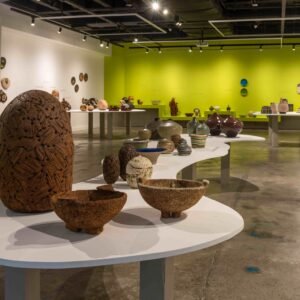
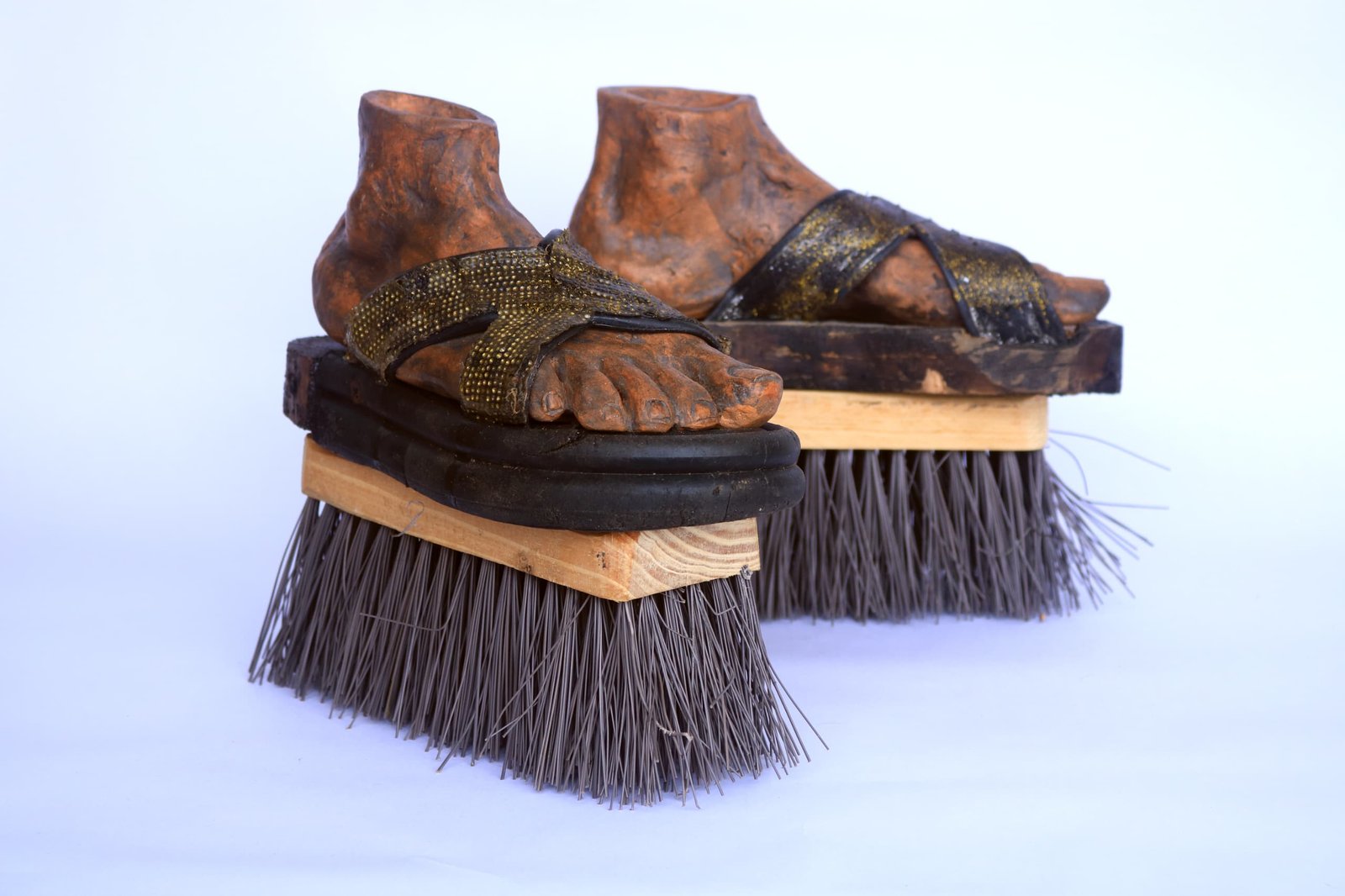
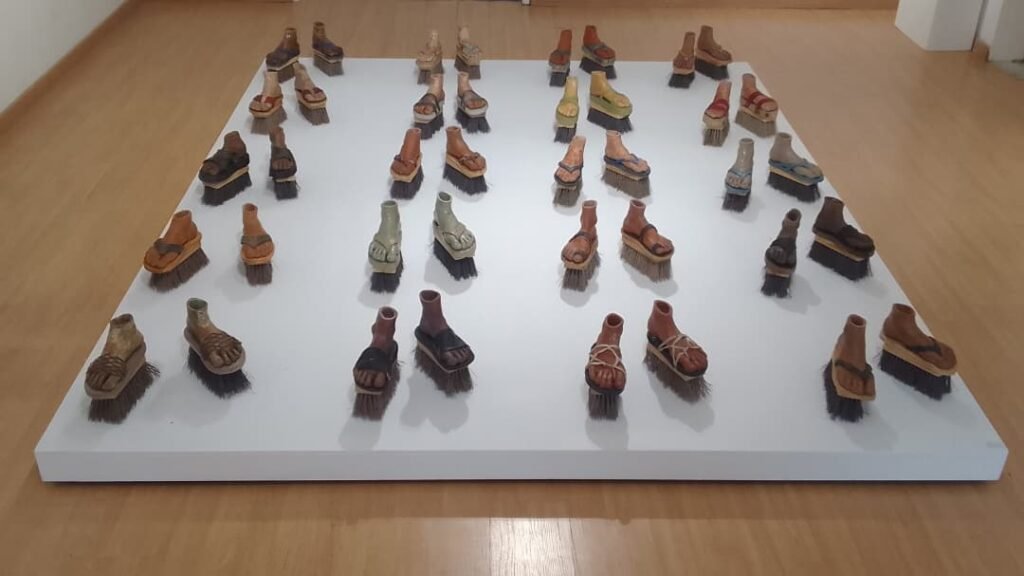
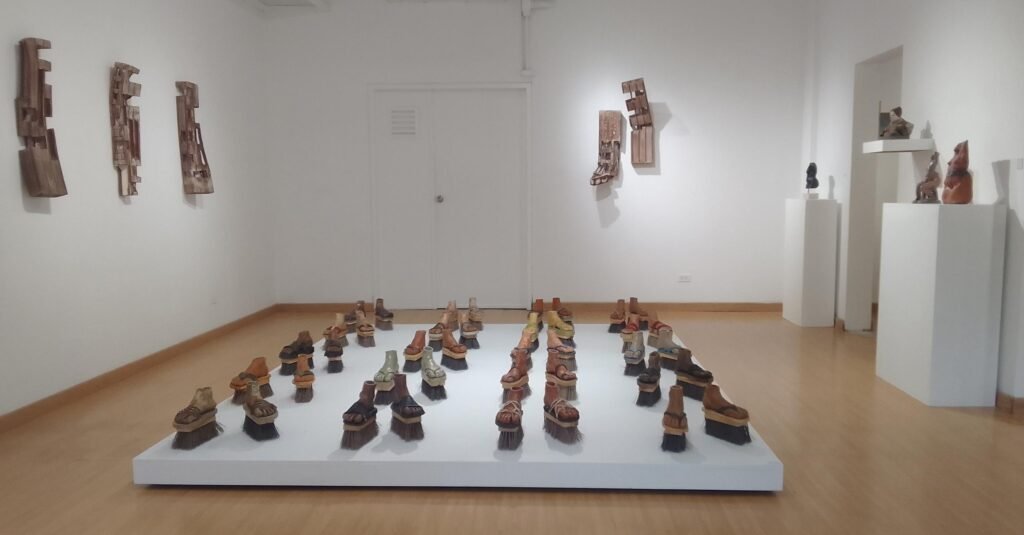
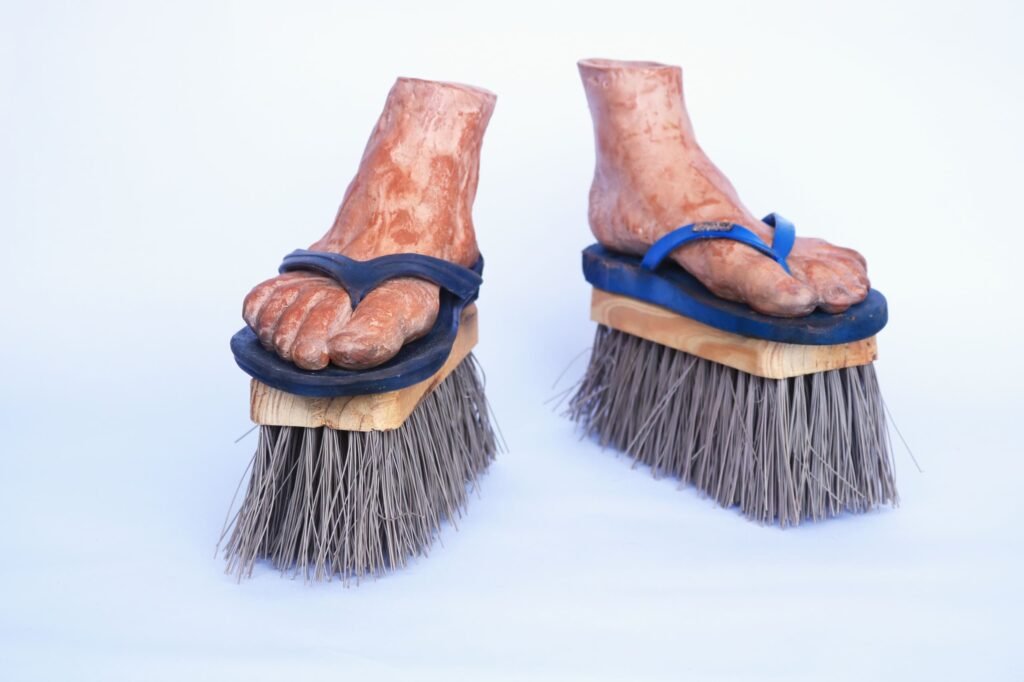
En la primera individual de la artista venezolana Laura Silva Niño, titulada “Territorio en reclamación”, que se exhibe en Cabinet Gallery del Centro de Arte Los Galpones, con curaduría de Tahía Rivero, cobra vida una instalación con una serie de pies fragmentados que descansan sobre cepillos domésticos como si el cuerpo hubiese sido condenado a sostenerse sobre el desgaste mismo. No avanzan. No retroceden. Permanecen detenidos en una especie de equilibrio de fuerzas incierto entre la fragilidad y la resistencia. Hay algo profundamente humano en esa inmovilidad. Algo que remite al cansancio, al oficio repetido, a las expectativas que el tiempo deposita sobre nosotros hasta convertir el propio cuerpo en una superficie de carga.
Desde allí, la obra de Laura Silva comienza a desplegarse no como una representación anatómica del ser humano, sino como una exploración sensible de aquello que habita dentro de él. Sus esculturas parecen surgir desde la fisura, desde la vulnerabilidad y desde esa delicada tensión que existe entre lo que mostramos y aquello que silenciosamente contenemos. Al contemplar sus piezas, se despierta la certeza de que la artista, a través de sus manos, no solo manipula la arcilla de manera literal: nos está modelando a nosotros mismos en nuestras más íntimas y silenciosas contradicciones.
Existe, además, un vínculo antiguo, casi mítico, entre el barro y los relatos fundacionales de la condición humana. Desde las cosmogonías más remotas, el hombre surge de la materia informe; de una masa primaria que lentamente adquiere forma, transitando de la abstracción de una idea a la contundente realidad del objeto físicamente moldeado. En este quehacer, la arcilla adquiere una importancia que va mucho más allá del mero soporte material. En las manos de Silva Niño, la cerámica conserva una memoria táctil ineludible. Cada superficie guarda huellas, cortes, cicatrices, grietas y señales del proceso, como si las piezas se negaran a ocultar el tránsito y el dolor que las hizo posibles.
Esa condición terrestre de la arcilla —frágil y resistente al mismo tiempo— se transforma en el mapa donde colisionan lo interno y lo externo, lo consciente y lo inconsciente. Es la propia creadora quien define su propuesta concibiendo el cuerpo cerámico como “la piel donde batallan individuo y sociedad”. Sobre este relieve sensible se inscriben las expectativas de la mirada ajena, los estereotipos heredados y ciertas formas con las que la sociedad condiciona y proyecta su mirada sobre el cuerpo humano.
Para hacer visibles estas tensiones, Laura Silva acude al uso estratégico del cierre y la fragmentación. Lejos de concebir la ruptura como un acto puramente destructivo, las fracturas, los cortes y las aperturas operan aquí como señales de una disección quirúrgica y poética. Son umbrales necesarios que nos permiten asomarnos a la delgada línea que separa las dos realidades existentes: la apariencia externa y lo intangible de la mente, los sueños que ocupan lo subjetivo.
Al quebrar la continuidad de la forma, los sujetos de Laura comienzan a fungir como auténticas vasijas o contenedores del imaginario. A corta o larga distancia, esas aperturas revelan intimidad. El vacío en su obra no funciona como ausencia decorativa ni como simple recurso formal; se manifiesta aquí una hermosa paradoja espacial donde es precisamente el vacío lo que otorga a las piezas su más alto sentido simbólico.
En piezas como Soñadora, Mirada interior o Tres Pasillos, el cuerpo parece transformarse en una especie de arquitectura emocional. Hay figuras que funcionan como habitaciones del pensamiento, refugios incompletos de la memoria o estructuras vulnerables donde todavía resisten ciertas formas del miedo, del deseo y de la imaginación. Incluso cuando las esculturas permanecen inmóviles, transmiten la sensación de una vida interior en permanente tensión.
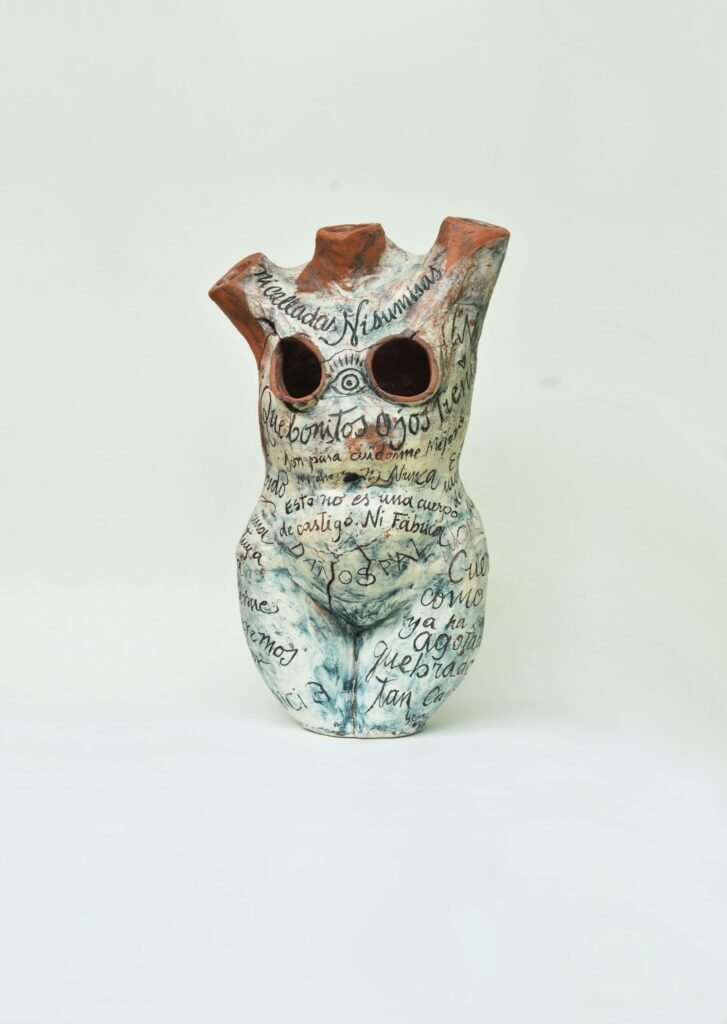
Algo similar ocurre con sus figuras femeninas. Obras como Venus Rana, Venus Sedente o Venus de almohada rehúyen cualquier idealización complaciente del cuerpo. En Laura Silva el cuerpo pesa, se pliega, se expande, se cansa y se expone. Y precisamente allí reside parte de su fuerza. Sus esculturas no hablan del cuerpo como apariencia o canon estético domesticado por la tradición, sino del cuerpo como una experiencia viva y resistente.
Quizás por eso sus piezas producen una sensación tan particular en el espectador: la impresión de estar frente a seres que, aun fragmentados, continúan intentando preservar algo esencial de sí mismos. Como si cada cuerpo modelado conservara todavía una pequeña resistencia interior frente a la densa realidad del mundo exterior.
Su trabajo parece detenerse con absoluta madurez en ese lugar incierto donde el cuerpo, la memoria y la conciencia todavía permanecen en construcción. Y es justamente allí, entre la fragilidad de la arcilla y la persistencia del espíritu, donde sus esculturas encuentran su forma más profunda de verdad: somos, al fin y al cabo, arcilla sensible intentando contener el infinito de nuestras propias ideas.
Inhabited Clay: The Ceramic Body as Vessel and Infrastructure of Being
In Laura Silva Niño’s work, the body ceases to be a stable form and becomes instead a territory of tension, memory, and resistance. Through ceramics, the Venezuelan artist explores the visible and invisible fractures inhabiting the human experience, constructing sculptures in which the fragility of clay and the persistence of inner life coexist as one sensitive material.
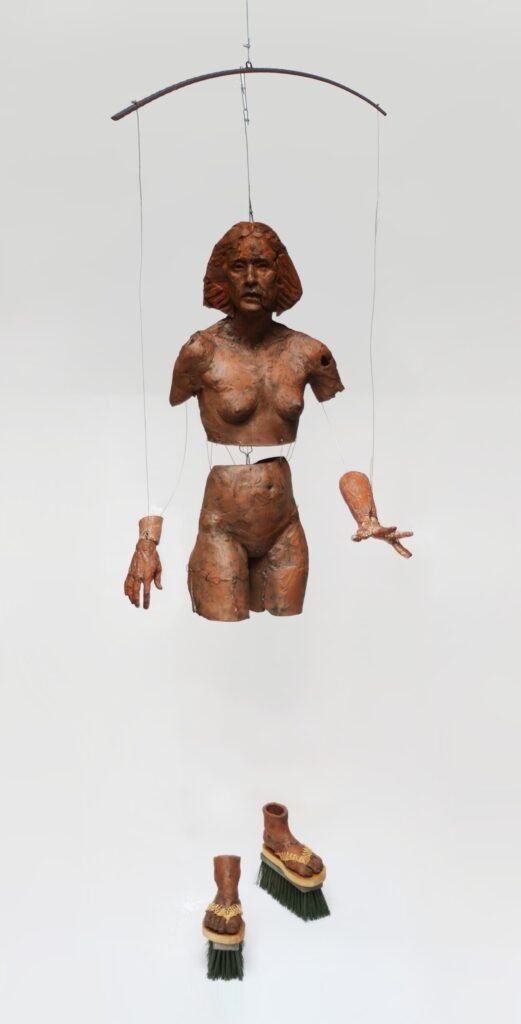
Sometimes a single image is enough to understand the inner silence of a work.
In the first solo show of Venezuelan artist Laura Silva Niño, titled “Territory in claim” on view at Cabinet Gallery in the Centro de Arte Los Galpones and curated by Tahía Rivero, an installation featuring a series of fragmented feet rest upon domestic brushes as if the body had been condemned to sustain itself on wear and tear itself. They do not move forward. They do not retreat. They remain arrested in a sort of uncertain balance of forces between fragility and resistance.
There is something deeply human in that immobility. Something that refers to weariness, to repeated labor, to the expectations that time deposits upon us until the body itself becomes a surface of burden. From there, Laura Silva’s work begins to unfold not as an anatomical representation of the human being, but as a sensitive exploration of that which inhabits within. Her sculptures seem to emerge from the fissure, from vulnerability, and from that delicate tension that exists between what we show and that which we silently contain. When contemplating her pieces, the certainty awakens that the artist, through her hands, does not only manipulate clay in a literal sense: she is modeling us in our most intimate and silent contradictions.
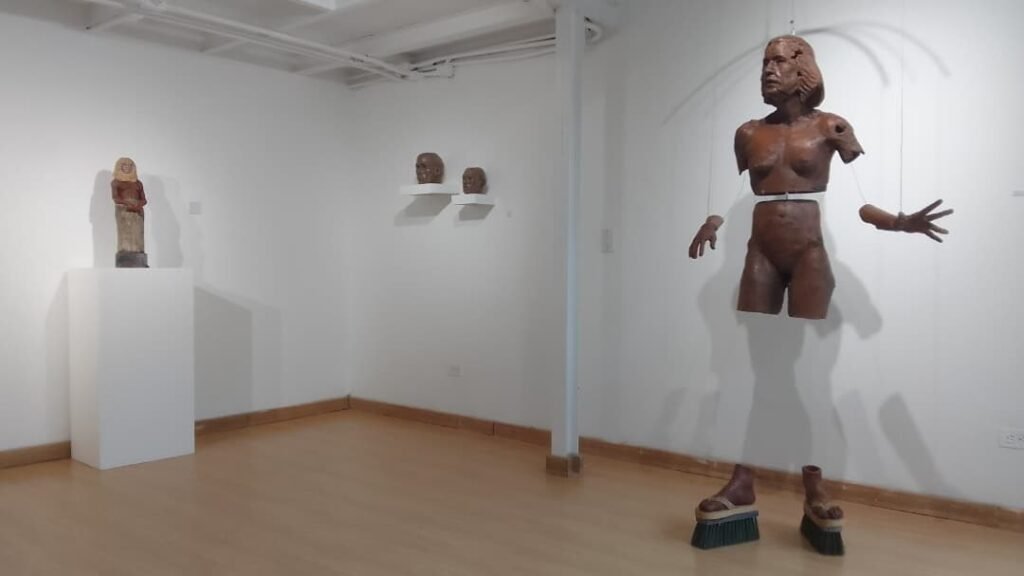
There is, furthermore, an ancient, almost mythical link between clay and the foundational narratives of the human condition. From the most remote cosmogonies, man emerges from unformed matter; from a primary mass that slowly acquires shape, transitioning from the abstraction of an idea to the forceful reality of the physically molded object. In this craft, clay acquires an importance that goes far beyond mere material support. In the hands of Silva Niño, ceramics retain an inescapable tactile memory. Each surface guards traces, cuts, scars, crevices, and signs of the process, as if the pieces refused to hide the journey and the pain that made them possible. This terrestrial condition of clay—fragile and resistant at the same time—is transformed into the map where the internal and the external, the conscious and the unconscious, collide.
It is the creator herself who defines her proposal by conceiving the ceramic body as «the skin where individual and society battle.» Upon this sensitive relief are inscribed the expectations of the external gaze, inherited stereotypes, and certain ways in which society conditions and projects its gaze onto the human body. To make these tensions visible, Laura Silva turns to the strategic use of closure and fragmentation. Far from conceiving rupture as a purely destructive act, the fractures, cuts, and openings operate here as signs of a surgical and poetic dissection. They are necessary thresholds that allow us to peer into the thin line separating two coexisting realities: the external appearance and the intangibility of the mind—the dreams that occupy the subjective realm.
By breaking the continuity of form, Laura’s subjects begin to serve as authentic vessels or containers of the imaginary. At close or long range, these openings reveal intimacy. Emptiness in her work does not function as a decorative absence or a simple formal resource; a beautiful spatial paradox manifests here, where it is precisely the emptiness that grants the pieces their highest symbolic meaning.
In pieces such as Soñadora, Mirada interior, or Tres Pasillos, the body seems to transform into a sort of emotional architecture. There are figures that function as rooms of thought, incomplete shelters of memory, or vulnerable structures where certain forms of fear, desire, and imagination still resist. Even when the sculptures remain motionless, they transmit the sensation of an inner life in permanent tension.
A similar phenomenon occurs with her female figures. Works like Venus Rana, Venus Sedente, or Venus de almohada avoid any complacent idealization of the body. In Laura Silva’s work, the body weighs, folds, expands, tires, and exposes itself. And precisely therein lies part of its strength. Her sculptures do not speak of the body as appearance or an aesthetic canon domesticated by tradition, but of the body as a living and resistant experience. Perhaps that is why her pieces produce such a particular sensation in the spectator: the impression of standing before beings that, even when fragmented, they continue attempting to preserve something essential of themselves. As if each modeled body still retained a small inner resistance against the dense reality of the outside world.
Her work seems to pause with absolute maturity in that uncertain place where body, memory, and consciousness still remain under construction. And it is precisely there, between the fragility of the clay and the persistence of the spirit, where her sculptures find their deepest form of truth: we are, after all, sensitive clay trying to contain the infinity of our own ideas.
Cesar Sasson
Magíster en Curaduría de Arte
coleccionsasson@gmail.com
@coleccionsasson
Ciudad de Panamá – Panmá
Junio 2026