

Siempre tendremos la primavera: La luz que resiste al doble temblor
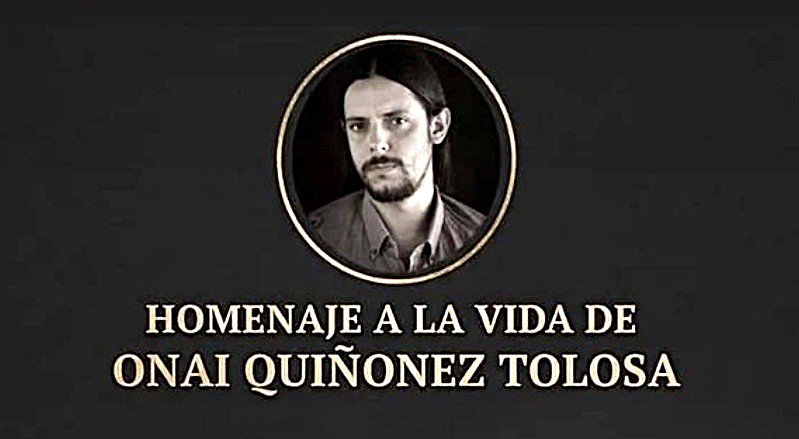
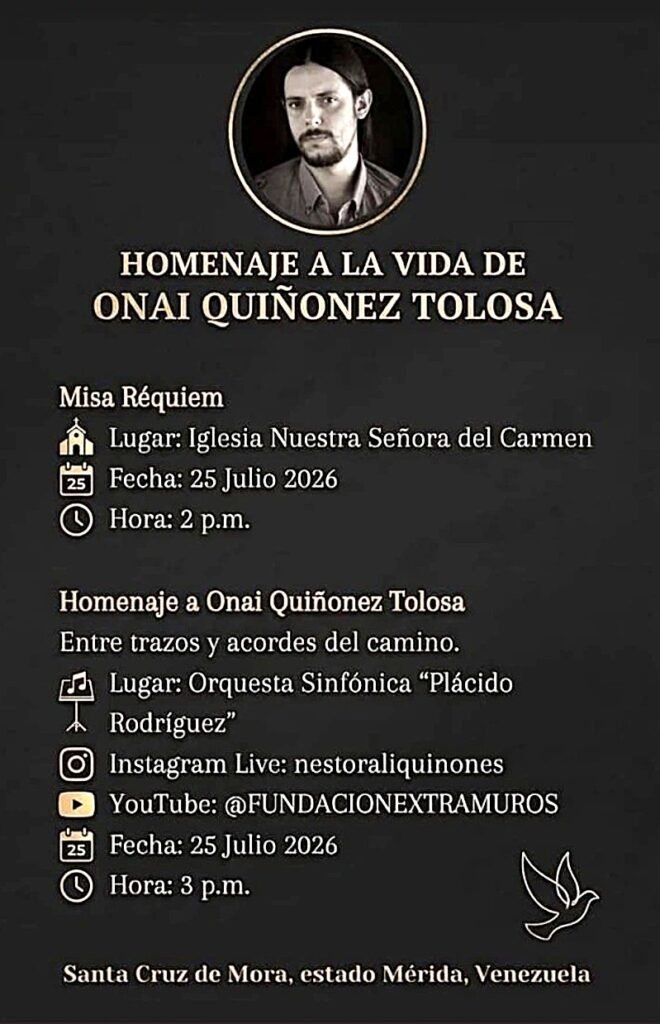
Este texto ha sido escrito con motivo del homenaje a la vida de Onai Quiñones Tolosa, a realizarse el próximo sábado 25 de julio de 2026 en Santa Cruz de Mora, estado Mérida, Venezuela. Sirva como un tributo a su memoria y como un abrazo fraterno a su familia, a sus colegas y a todas las víctimas y creadores venezolanos que hoy padecen las dolorosas secuelas de la reciente tragedia geológica.
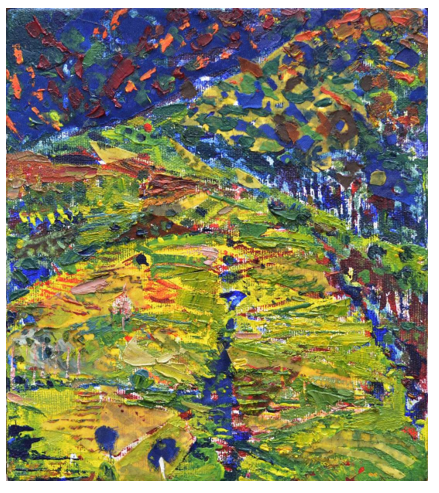
En el año 2020, en medio de la incertidumbre y el aislamiento que paralizaron al planeta, el pintor británico David Hockney compartió una imagen sencilla y poderosa: un dibujo digital de narcisos amarillos abriéndose paso sobre la hierba fresca. Acompañó la obra con un mensaje que dio la vuelta al mundo: “Remember, they can’t cancel spring.” (Recuerda que no pueden cancelar la primavera). Con ello, Hockney nos recordaba una verdad elemental y salvadora: las crisis humanas, por devastadoras que parezcan, no pueden decretar la suspensión de la vida. La naturaleza y sus ciclos profundos operan en una dimensión que escapa a nuestras catástrofes; la primavera no se puede cancelar.
En Venezuela, un territorio cuya geografía física y emocional ha sido sacudida recientemente por el impacto de un doble terremoto, esa «primavera constante» de la que hablaba Hockney no se manifiesta en el brote de las flores de estación, sino en la persistencia de su luz. El sismo violento abrió grietas en el suelo, fracturó el concreto de nuestras ciudades y, de manera mucho más dolorosa, quebró vidas, hogares y talleres de creadores a lo largo del país. La tierra herida en La Guaira y en el interior nos recordó, de golpe, nuestra más absoluta vulnerabilidad. El suelo falló, las estructuras colapsaron y el polvo cubrió el horizonte. En ese colapso perdimos infraestructuras, pero sobre todo perdimos seres entrañables; la tragedia golpeó con especial dureza a muchas comunidades y a muchos hacedores de cultura, dejándolos a la intemperie física y espiritual.
Sin embargo, a la mañana siguiente de la tragedia, la luz volvió a caer sobre el perfil del Ávila y sobre las costas con la misma verticalidad fundacional de siempre. El cielo no se agrietó.
Es allí, en esa tensión entre el suelo que tiembla y la luz que permanece, donde el arte surge no como un lujo estético, sino como un sismógrafo capaz de registrar el dolor y, al mismo tiempo, suturar la herida colectiva. No es la primera vez que la historia venezolana se ve obligada a reconstruirse desde los escombros. Tras cada sacudida geológica o histórica, la memoria social ha encontrado su pegamento en la creación. Cuando las estructuras físicas e institucionales se desploman, los artistas son quienes sostienen el andamiaje invisible de nuestra dignidad.
Pensemos, por ejemplo, en la obsesión constructiva de Manuel Cabré. Al pintar el Ávila una y otra vez, bajo todas las luces y en todas las estaciones, el maestro no realizaba un mero ejercicio de repetición paisajística; buscaba, quizás de manera inconsciente, una certeza. En un territorio marcado por la inestabilidad de la tierra y de los hombres, el Ávila de Cabré es una estructura que jamás se cae. Es el refugio visual del país, una arquitectura de color y atmósfera que se mantiene en pie cuando todo lo demás cede. Cada pincelada de ese maestro del paisaje nos legó una lección: aprender a mirar es una forma de resistencia.
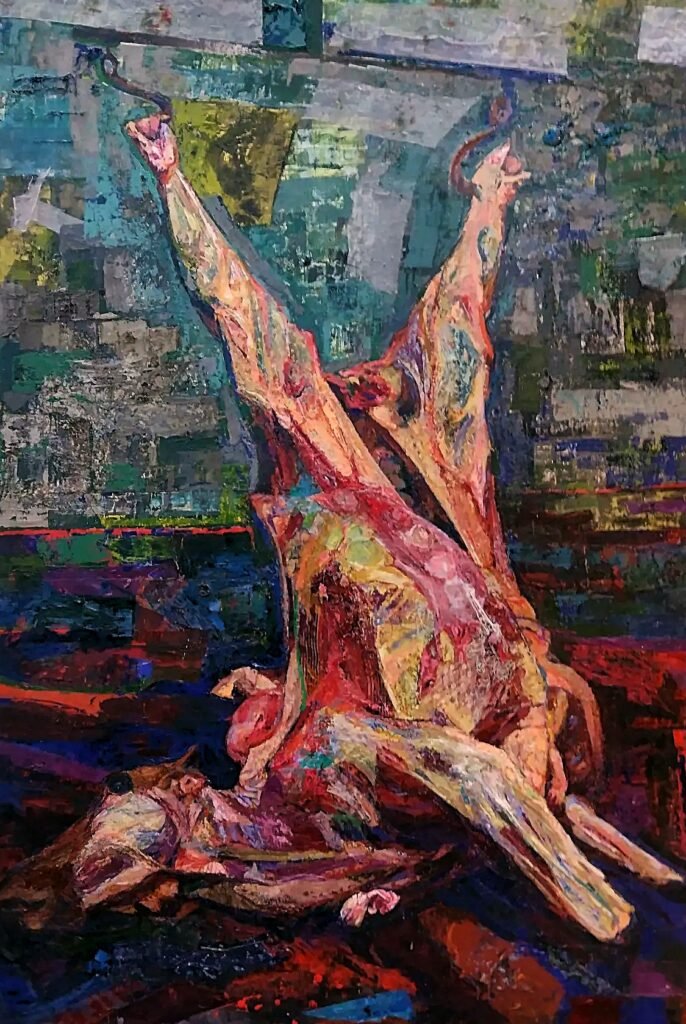
Hoy, ante la pérdida y el vacío que nos deja este doble temblor, esa resistencia se vuelve personal, dolorosa y urgente. El colapso se llevó físicamente a Onai Quiñones Tolosa, esa joven y extraordinaria fuerza de nuestra plástica que en 2024 se alzara con el máximo galardón del Salón Jóvenes con FIA. Es inevitable e infinitamente triste volver hoy la mirada sobre la obra que entonces lo consagró, Res y Todas Las Carnes. En aquella pintura de grandes dimensiones, Onai nos presentaba un cuerpo fragmentado y distorsionado, atrapado en una postura de sufrimiento que rozaba los abismos del alma humana. Como escribí en aquella oportunidad en una reseña que luego el propio Onai, conmovido por su lectura, me pidió para incorporarla a un catálogo de presentación que estaba elaborando, él utilizaba la deformación del cuerpo para comunicar una experiencia humana en crisis, reflexionando de manera directa sobre la fragilidad de la existencia y convirtiendo al cuerpo en un campo de batalla de emociones extremas.
Qué dolorosa paradoja que aquella fragilidad física que él pintaba con tanta madurez y crudeza expresiva en sus telas haya sido la misma que la tierra quebró en La Guaira. Pero si la obra de Onai nos enseñó algo, es que el dolor humano y la lucha trascienden lo meramente corpóreo. El terremoto pudo derribar los muros y silenciar su pulso físico, pero no puede sepultar la mirada que dejó sembrada en nuestra historia visual. Dedicar la memoria a Onai, precisamente ahora que su natal Santa Cruz de Mora se prepara para despedirlo entre acordes y trazos, es un acto de soberanía espiritual. Su obra no pertenece al reino del polvo o de las ruinas; pertenece a esa continuidad de la luz que ningún proceso histórico ni geológico logrará extinguir.
Pintar, escribir, curar, resistir o recordar en medio de la reconstrucción es aferrarse a la certeza de Hockney. Aunque la tierra se quiebre bajo nuestros pies y el dolor nos abrume, la luz que viaja por el aire continúa intacta, cruzando el espacio sin romperse. El arte es nuestra primavera constante: la garantía de que, mientras haya quienes miren y piensen el país desde la sensibilidad, siempre habrá un mañana que reconstruir.
Para Onai, para los creadores heridos por el temblor y para las familias que hoy buscan resguardo bajo el cielo, la luz sigue cayendo sobre la montaña y sobre el lienzo de la memoria. La sombra es solo un matiz temporal. Al final, y a pesar de cualquier temblor, siempre tendremos la primavera.
We Will Always Have Spring: The Light that Resists the Double Earthquake
This text was written on the occasion of the tribute to the life of Onai Quiñones Tolosa, to be held next Saturday, July 25, 2026, in Santa Cruz de Mora, Mérida state, Venezuela. May it serve as a tribute to his memory and as a fraternal embrace to his family, his colleagues, and all the Venezuelan victims and creators who today suffer the painful aftermath of the recent geological tragedy.
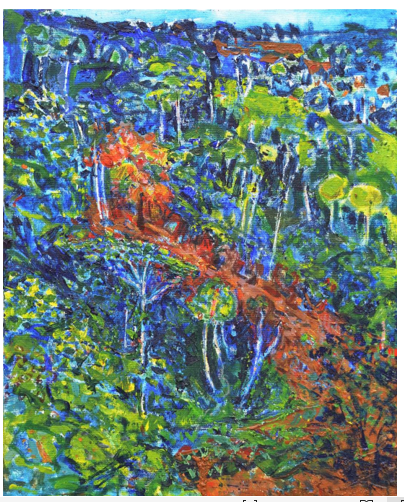
In the year 2020, amid the uncertainty and isolation that paralyzed the planet, the British painter David Hockney shared a simple and powerful image: a digital drawing of yellow daffodils breaking through the fresh grass. He accompanied the artwork with a message that went around the world: “Remember, they can’t cancel spring.” With this, Hockney reminded us of an elemental and saving truth: human crises, devastating as they may seem, cannot decree the suspension of life. Nature and its deep cycles operate in a dimension that escapes our catastrophes; spring cannot be canceled.
In Venezuela, a territory whose physical and emotional geography has been recently shaken by the impact of a double earthquake, that «constant spring» Hockney spoke of does not manifest itself in the blossoming of seasonal flowers, but in the persistence of its light. The violent earthquake opened cracks in the ground, fractured the concrete of our cities and, far more painfully, shattered lives, homes, and creators’ workshops throughout the country. The wounded earth in La Guaira and across the interior suddenly reminded us of our absolute vulnerability. The ground failed, structures collapsed, and dust blanketed the horizon. In that collapse we lost infrastructure, but above all, we lost cherished individuals; the tragedy struck many communities and cultural makers with particular harshness, leaving them physically and spiritually exposed.
Yet, the morning after the tragedy, light fell once again upon the silhouette of El Ávila and the coastlines with the same foundational verticality as always. The sky did not crack.
It is there, within that tension between the shaking ground and the remaining light, where art emerges not as an aesthetic luxury, but as a seismograph capable of registering pain and, at the same time, suturing the collective wound. This is not the first time Venezuelan history has been forced to rebuild itself from the rubble. After every geological or historical upheaval, social memory has found its adhesive in creation. When physical and institutional structures collapse, it is the artists who uphold the invisible scaffolding of our dignity.
Let us think, for example, of Manuel Cabré’s constructive obsession. By painting El Ávila time and again, under every light and in every season, the master was not engaging in a mere exercise of landscape repetition; he was searching, perhaps unconsciously, for a certainty. In a territory marked by the instability of the land and of men, Cabré’s Ávila is a structure that never falls. It is the country’s visual refuge, an architecture of color and atmosphere that stands tall when everything else gives way. Each brushstroke from that master of landscape bequeathed us a lesson: learning to look is a form of resistance.
Today, faced with the loss and the void left by this double earthquake, that resistance becomes personal, painful, and urgent. The collapse physically took Onai Quiñones Tolosa, that young and extraordinary force of our visual arts who in 2024 won the highest award at the Salón Jóvenes con FIA. It is inevitable and infinitely sad to look back today at the artwork that cemented his recognition, Res y Todas Las Carnes (Beef and All the Flesh). In that large-scale painting, Onai presented us with a fragmented and distorted body, trapped in a posture of suffering that verged on the abysses of the human soul. As I wrote at the time in a review—which Onai himself, moved by the reading, later asked me to include in an exhibition catalog he was preparing—he utilized the deformation of the body to communicate a human experience in crisis, reflecting directly on the fragility of existence and turning the body into a battlefield of extreme emotions.
What a painful paradox that the physical fragility he painted with such maturity and expressive rawness on his canvases was the very same that the earth shattered in La Guaira. But if Onai’s work taught us anything, it is that human pain and struggle transcend the merely corporeal. The earthquake may have torn down the walls and silenced his physical pulse, but it cannot bury the gaze he left planted in our visual history. Dedicating our memory to Onai, precisely now as his native Santa Cruz de Mora prepares to say goodbye to him among musical chords and brushstrokes, is an act of spiritual sovereignty. His work does not belong to the realm of dust or ruins; it belongs to that continuity of light that no historical or geological process will ever extinguish.
Painting, writing, curating, resisting, or remembering in the midst of reconstruction is to cling to Hockney’s certainty. Even if the earth breaks beneath our feet and sorrow overwhelms us, the light traveling through the air remains intact, crossing space without breaking. Art is our constant spring: the guarantee that, as long as there are those who look at and think about the country through sensitivity, there will always be a tomorrow to rebuild.
For Onai, for the creators wounded by the earthquake, and for the families currently seeking shelter beneath the sky, the light keeps falling upon the mountain and upon the canvas of memory. The shadow is but a temporary nuance. In the end, and despite any earthquake, we will always have spring.
Cesar Sasson
Magíster en Curaduría de Arte
coleccionsasson@gmail.com
@coleccionsasson
Ciudad de Panamá – Panamá
Julio 2026