

El mapa afectivo de la mirada: Una reflexión en torno a la pintura de Pedro Medina
En la pintura de Pedro Medina, la imagen parece suspendida entre la intimidad y la memoria. A través de retratos, interiores y escenas silenciosas, el artista venezolano construye una obra donde la fragilidad de la percepción y la persistencia de los afectos transforman lo cotidiano en una experiencia profundamente humana.
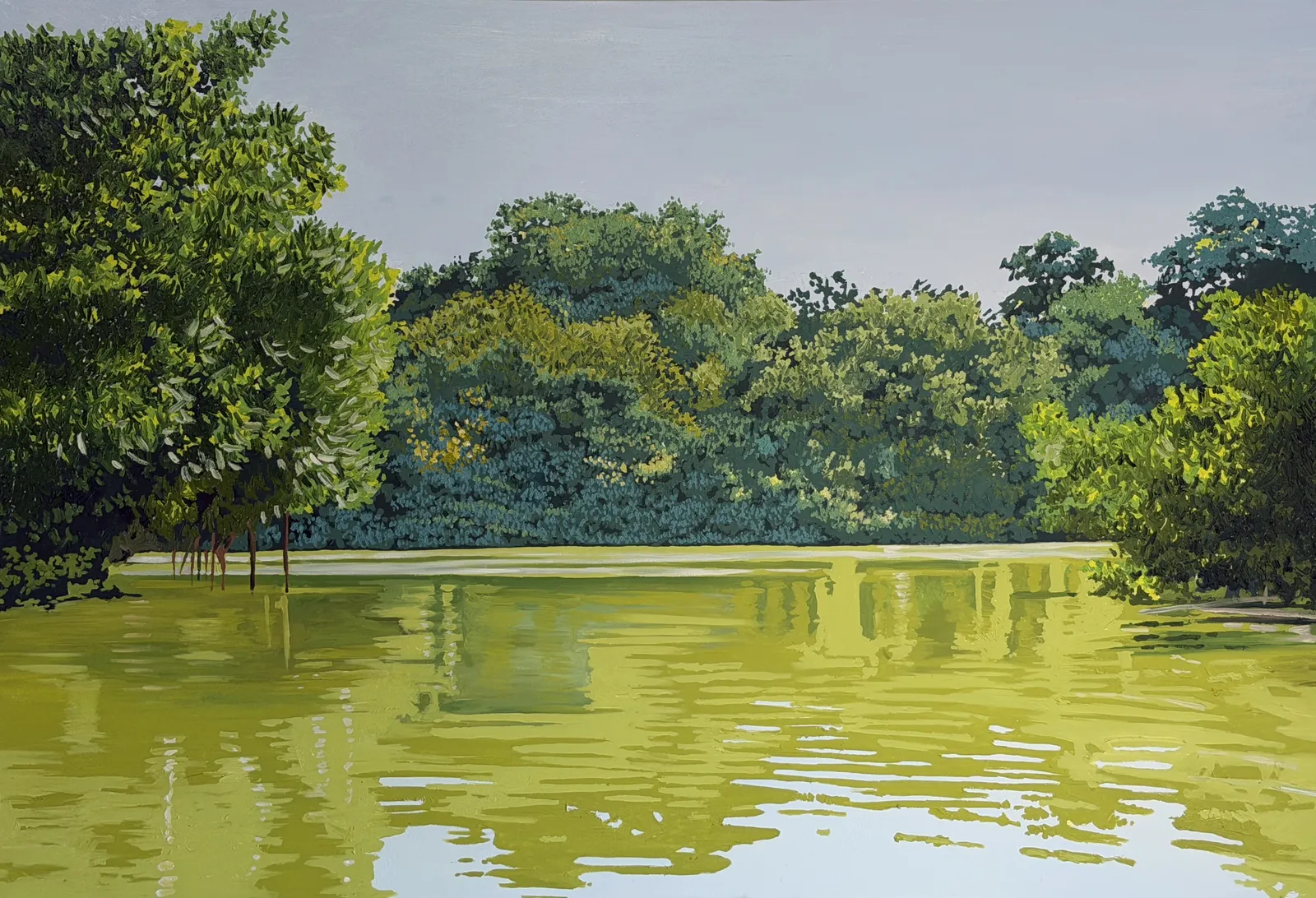
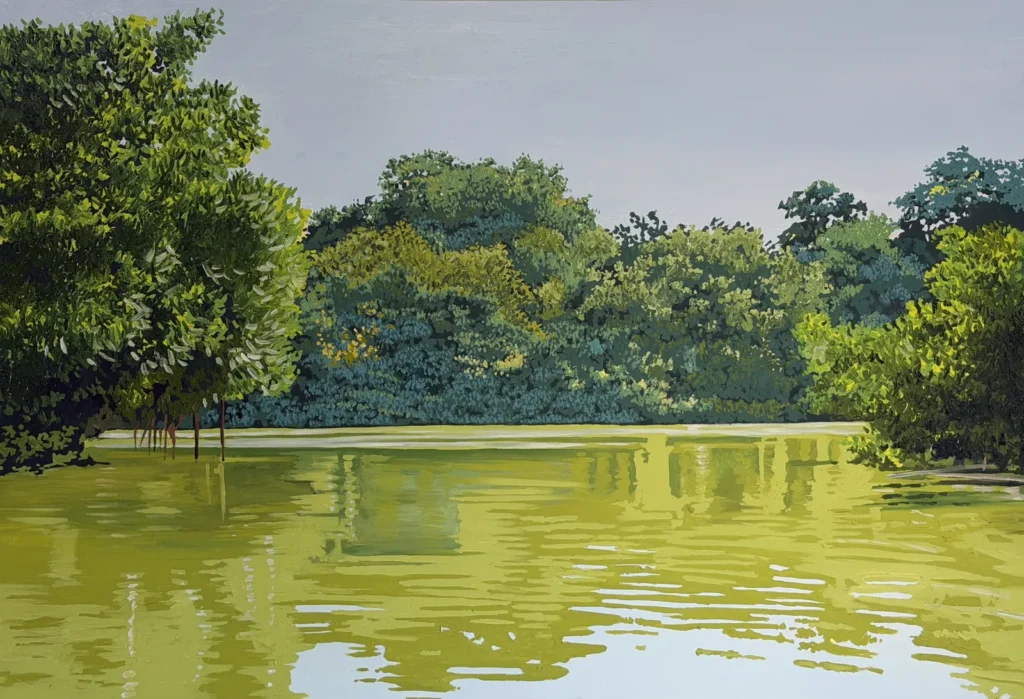
Hay momentos en que el circuito del arte nos sacude con la fuerza de una coincidencia afortunada. El pasado domingo 24 de mayo, la Galería Beatriz Gil en Caracas abrió sus puertas para inaugurar El sueño de la mirada, la más reciente propuesta individual del joven artista venezolano Pedro Medina. El evento, respaldado por la agudeza curatorial de Ruth Auerbach, marca un nuevo momento de madurez en la trayectoria de un pintor que se ha empeñado en reivindicar el oficio de la tela y el óleo en tiempos dominados por la velocidad de la imagen digital.
Lamentablemente, mis circunstancias actuales de residencia fuera de Venezuela me impidieron estar allí físicamente para recorrer la sala, saludar al artista y experimentar la muestra en cuerpo presente. Sin embargo, la distancia geográfica se disuelve de inmediato cuando interviene la memoria afectiva. Al enterarme de la exposición, un hilo invisible pero persistente me conectó de vuelta con Caracas y con el universo visual de Pedro. Y es que, ante la imposibilidad de contemplar hoy sus nuevos lienzos en la galería, me refugio también en la certeza de que una parte significativa de esa mirada habita desde hace tiempo en las paredes de mi propia cotidianidad.
Durante años pensé que los retratos de mis hijas pertenecían únicamente al territorio íntimo de la memoria familiar. Con el tiempo entendí que también formaban parte de otra cosa: una larga conversación sobre el tiempo, la mirada y la persistencia de los afectos.
A lo largo de más de tres décadas, numerosos artistas atravesaron ese proyecto de vida dejando no solo imágenes, sino también distintas maneras de mirar. Algunos se acercaron desde la pintura, otros desde el dibujo, otros desde la escultura y otros desde la interpretación emocional o simbólica. Cada retrato terminó convirtiéndose, sin proponérselo, en el registro silencioso de una época, de una sensibilidad y también de una relación humana.
Por eso me resultó particularmente significativo que uno de los últimos artistas en incorporarse a esa larga secuencia haya sido Pedro Medina.
Nuestra relación nació y se consolidó desde la distancia, impulsada primero por la admiración hacia su trabajo y luego por una afinidad silenciosa que terminó desembocando en la realización de dos retratos de mediano formato que hoy forman parte de mi colección. Quizás por eso esas imágenes poseen algo que me parece profundamente contemporáneo: fueron construidas desde la cercanía afectiva, pero también desde la distancia, desde ese espacio intermedio donde la mirada intenta aproximarse sin invadir del todo.
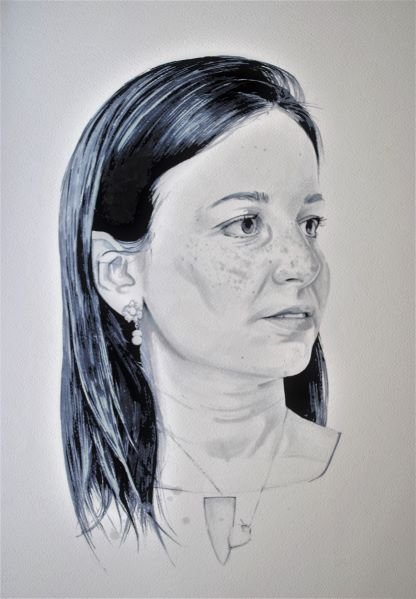
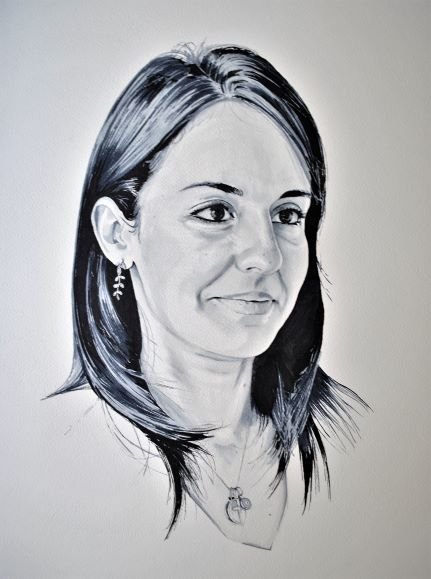
Lo que distingue los retratos realizados por Pedro Medina dentro de esta extensa cronología afectiva no es únicamente el rigor de su factura, sino la manera silenciosa en que el artista parece comprender la fragilidad misma de la representación. Pedro prescinde aquí del artificio del color para adentrarse en la elocuencia de la monocromía. En una escala contenida de grises, blancos y negros profundos, logra capturar no solo ciertos rasgos precisos —la leve desviación de una mirada, la contención de un gesto, la temperatura emocional de una presencia— sino también algo mucho más difícil de fijar: la sensación de humanidad suspendida en el tiempo.
Hay en estas piezas una contención particularmente conmovedora. El fondo prácticamente vacío, la delicadeza con la que administra los contrastes y la ausencia de cualquier dramatización innecesaria hacen que la atención del espectador termine desplazándose hacia algo más difícil de nombrar: la presencia.
Las figuras no aparecen construidas desde la grandilocuencia psicológica ni desde la afirmación social del retrato tradicional. Tampoco desde el hiperrealismo contemporáneo que muchas veces termina sacrificando humanidad en favor del virtuosismo técnico. En Pedro Medina ocurre algo distinto. Sus retratos parecen suspendidos en un estado de observación íntima, como si el artista hubiese preferido preservar el misterio antes que agotarlo mediante la descripción.
Con el tiempo he comprendido que todo retrato importante contiene inevitablemente dos tiempos superpuestos: el instante específico en que la obra fue realizada y la duración silenciosa que comienza después, cuando la imagen pasa a convivir con nuestra memoria. En ese sentido, los retratos de Pedro Medina no son solamente representaciones contemporáneas de mis hijas; son también nuevas capas temporales incorporadas a una historia visual construida a lo largo de décadas.
Y quizás allí reside uno de los aspectos más singulares de esta experiencia. Pedro Medina pertenece a otra generación, a otro contexto histórico y visual, muy distinto al de los artistas que iniciaron este recorrido décadas atrás. Sin embargo, lejos de producir una ruptura, sus imágenes logran integrarse naturalmente a esa memoria acumulada, aportando una sensibilidad contemporánea marcada por la sutileza, la fragilidad perceptiva y una comprensión mucho más abierta de la identidad y del tiempo.
Esa misma sensibilidad aparece expandida en El sueño de la mirada, donde la curaduría de Ruth Auerbach permite observar con mayor claridad una constante que atraviesa buena parte de su producción reciente: la construcción de imágenes donde la experiencia cotidiana deja de ser simplemente descriptiva para convertirse en un territorio emocional y perceptivo mucho más complejo.
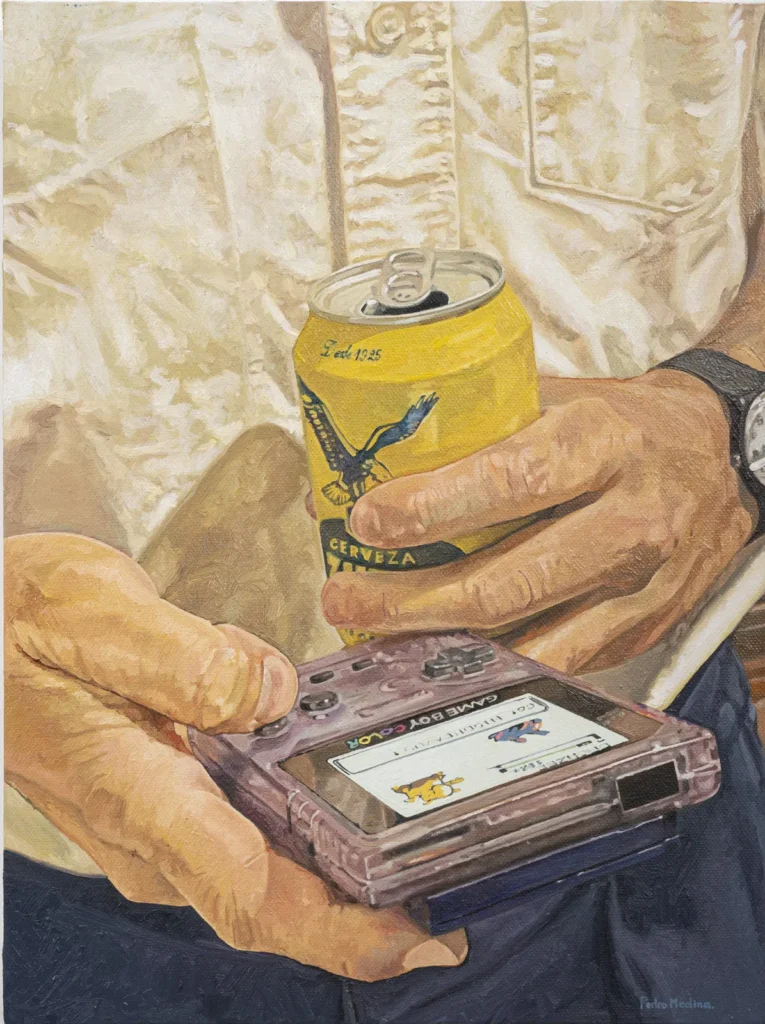
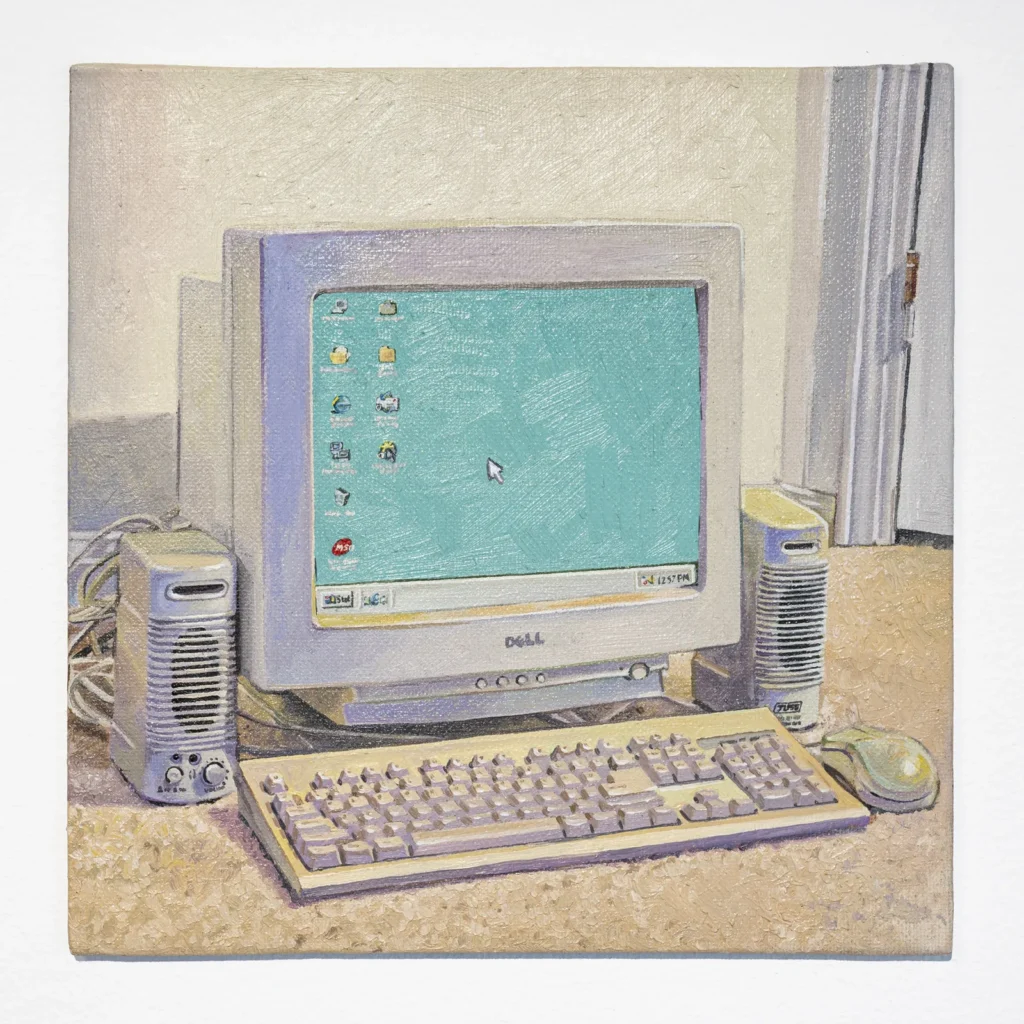
La curaduría nos habla de un “cambio de escala”, de una pintura que se repliega hacia lo íntimo, lo doméstico y el entorno cercano para indagar sobre cómo habitamos nuestro territorio presente. Y es precisamente allí donde el trabajo de Pedro Medina adquiere una densidad particularmente significativa. Más que representar escenas cerradas o narraciones definitivas, sus obras parecen habitar un estado de suspensión. Los espacios, los objetos y las figuras conservan siempre algo parcialmente inasible, como si el artista estuviese menos interesado en documentar la realidad que en preservar la sensación íntima de haberla atravesado.
Al conectar ambas experiencias —la exposición actual y los retratos que habitan mi colección— comprendo que todas estas imágenes pertenecen finalmente a un mismo universo conceptual. Cuando Pedro pinta objetos cotidianos, interiores domésticos o rostros humanos, no está simplemente representando el mundo visible. Está registrando microclimas afectivos. Está intentando ralentizar el tiempo.
Allí radica quizás uno de los rasgos más valiosos de su trabajo. Frente al parpadeo inmediato de las pantallas y a la sobreexposición visual contemporánea, la pintura de Pedro Medina opera casi como una forma de resistencia silenciosa. Sus obras parecen reclamar otra temporalidad: una más lenta, más vulnerable y profundamente humana.
La coincidencia de esta inauguración me confirma además que el arte posee una maravillosa condición circular. Mientras el público caraqueño se reencuentra hoy con la madurez de Pedro Medina a través de sus nuevas búsquedas pictóricas en las salas de la Galería Beatriz Gil en Las Mercedes, en la intimidad de mi hogar sus retratos continúan latiendo con la misma serenidad original.
Y tal vez allí resida finalmente la belleza más profunda de estas imágenes.
No en la ilusión de preservar intacto el pasado, sino en la posibilidad de seguir construyendo memoria mientras el tiempo continúa avanzando.
Porque al final, toda gran colección de retratos termina convirtiéndose también en el retrato invisible de quienes aprendieron a mirarse unos a otros a través del tiempo.
The Affective Map of the Gaze: A Reflection on the Painting of Pedro Medina
In Pedro Medina’s painting, the image seems suspended between intimacy and memory. Through portraits, interiors, and silent scenes, the Venezuelan artist constructs a body of work in which the fragility of perception and the persistence of affection transform the everyday into a profoundly human experience.
There are moments when the art world shakes us with the force of a fortunate coincidence. Last Sunday, May 24, Galería Beatriz Gil in Caracas opened its doors to inaugurate The Dream of the Gaze, the most recent solo exhibition by young Venezuelan artist Pedro Medina. The event, supported by the sharp curatorial vision of Ruth Auerbach, marks a new stage of maturity in the trajectory of a painter committed to reclaiming the craft of canvas and oil painting in times dominated by the speed of digital imagery.
Unfortunately, my current circumstances living outside Venezuela prevented me from being there physically to walk through the gallery, greet the artist, and experience the exhibition in person. Yet geographical distance dissolves immediately when affective memory intervenes. Upon learning about the exhibition, an invisible yet persistent thread connected me once again to Caracas and to Pedro’s visual universe. Faced with the impossibility of contemplating his new canvases in the gallery today, I take refuge in the certainty that a significant part of that gaze has long inhabited the walls of my own daily life.
For years, I believed the portraits of my daughters belonged solely to the intimate territory of family memory. Over time, I understood that they were also part of something else: a long conversation about time, perception, and the persistence of affection.
Over the course of more than three decades, numerous artists passed through that life project, leaving behind not only images but also different ways of seeing. Some approached through painting, others through drawing, sculpture, or emotional and symbolic interpretation. Each portrait ultimately became, almost unintentionally, the silent record of an era, a sensibility, and also of a human relationship.
That is why it felt particularly meaningful that one of the latest artists to join this long sequence was Pedro Medina.
Our relationship was born and consolidated at a distance, first driven by admiration for his work and later by a quiet affinity that eventually resulted in the creation of two medium-format portraits that today form part of my collection. Perhaps that is why these images possess something I find deeply contemporary: they were constructed from affective closeness, but also from distance, from that intermediate space where the gaze attempts to approach without entirely invading.
What distinguishes the portraits created by Pedro Medina within this extensive affective chronology is not merely the rigor of their execution, but the quiet way in which the artist seems to understand the very fragility of representation. Pedro dispenses with the artifice of color in order to enter the eloquence of monochromy. Within a restrained scale of grays, whites, and deep blacks, he manages to capture not only certain precise features —the slight deviation of a gaze, the restraint of a gesture, the emotional temperature of a presence— but also something far more difficult to fix: the sensation of humanity suspended in time.
There is a particularly moving restraint in these works. The almost empty background, the delicacy with which he administers contrasts, and the absence of any unnecessary dramatization cause the viewer’s attention to shift toward something more difficult to name: presence. The figures are not constructed through psychological grandiloquence nor through the social affirmation characteristic of traditional portraiture. Nor do they emerge from the contemporary hyperrealism that often sacrifices humanity in favor of technical virtuosity. In Pedro Medina’s work, something else occurs. His portraits seem suspended in a state of intimate observation, as though the artist had preferred to preserve mystery rather than exhaust it through description.
Over time, I have come to understand that every important portrait inevitably contains two overlapping temporalities: the specific instant in which the work was created and the silent duration that begins afterward, when the image starts coexisting with our memory. In that sense, Pedro Medina’s portraits are not merely contemporary representations of my daughters; they are also new temporal layers incorporated into a visual history constructed over decades.
And perhaps therein lies one of the most singular aspects of this experience. Pedro Medina belongs to another generation, to another historical and visual context, very different from that of the artists who began this journey decades ago. Yet rather than producing rupture, his images integrate naturally into that accumulated memory, contributing a contemporary sensibility marked by subtlety, perceptual fragility, and a much more open understanding of identity and time.
That same sensibility expands throughout The Dream of the Gaze, where Ruth Auerbach’s curatorial vision allows us to observe more clearly a constant running through much of his recent production: the construction of images in which everyday experience ceases to be merely descriptive and becomes a far more complex emotional and perceptual territory.
The curatorship speaks of a “change of scale,” of a painting that folds inward toward intimacy, domesticity, and the nearby environment in order to investigate how we inhabit our present territory. And it is precisely there that Pedro Medina’s work acquires a particularly meaningful density. Rather than representing closed scenes or definitive narratives, his works seem to inhabit a state of suspension. Spaces, objects, and figures always preserve something partially elusive, as though the artist were less interested in documenting reality than in preserving the intimate sensation of having passed through it.
By connecting both experiences —the current exhibition and the portraits inhabiting my collection— I understand that all these images ultimately belong to the same conceptual universe. When Pedro paints everyday objects, domestic interiors, or human faces, he is not simply representing the visible world. He is recording affective microclimates. He is attempting to slow down time.
Perhaps therein resides one of the most valuable qualities of his work. In the face of the immediate flicker of screens and contemporary visual overexposure, Pedro Medina’s painting operates almost as a form of silent resistance. His works seem to reclaim another temporality: one that is slower, more vulnerable, and profoundly human.
The coincidence of this exhibition also confirms for me that art possesses a marvelous circular condition. While the public in Caracas reconnects today with Pedro Medina’s maturity through his new pictorial explorations in the spaces of Galería Beatriz Gil in Las Mercedes, within the intimacy of my home his portraits continue to pulse with the same original serenity.
And perhaps therein ultimately resides the deepest beauty of these images.
Not in the illusion of preserving the past intact, but in the possibility of continuing to build memory while time continues moving forward.
Because in the end, every great collection of portraits also becomes the invisible portrait of those who learned to look at one another through time.

Cesar Sasson
Magíster en Curaduría de Arte
coleccionsasson@gmail.com
@coleccionsasson
Ciudad de Panamá – Panamá
Mayo 2026