

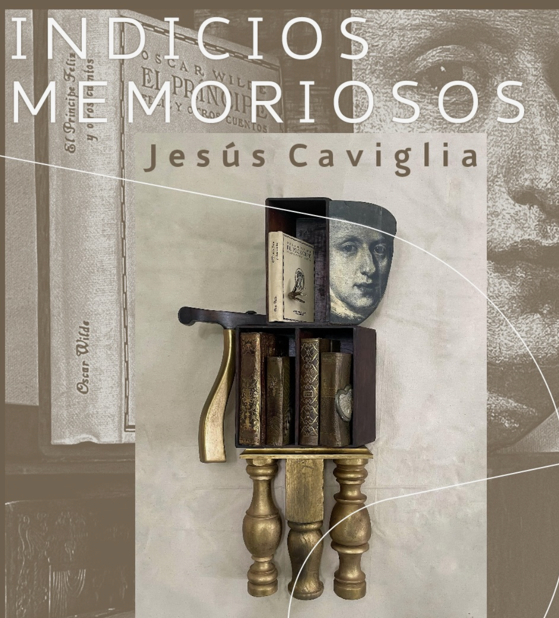
Jesús Caviglia: Donde los objetos recuerdan
En su más reciente muestra en Caracas, Jesús Caviglia transforma objetos en desuso en estructuras de memoria. A través del ensamblaje, su obra propone una lectura donde lo material persiste como experiencia y el pasado se reorganiza en el presente.
Hay artistas que trabajan con imágenes; otros, con ideas. Jesús Caviglia trabaja con restos. Pero no con restos entendidos como residuo, sino como materia cargada de tiempo. Su obra no consiste en acumular objetos, sino en reordenar la memoria.
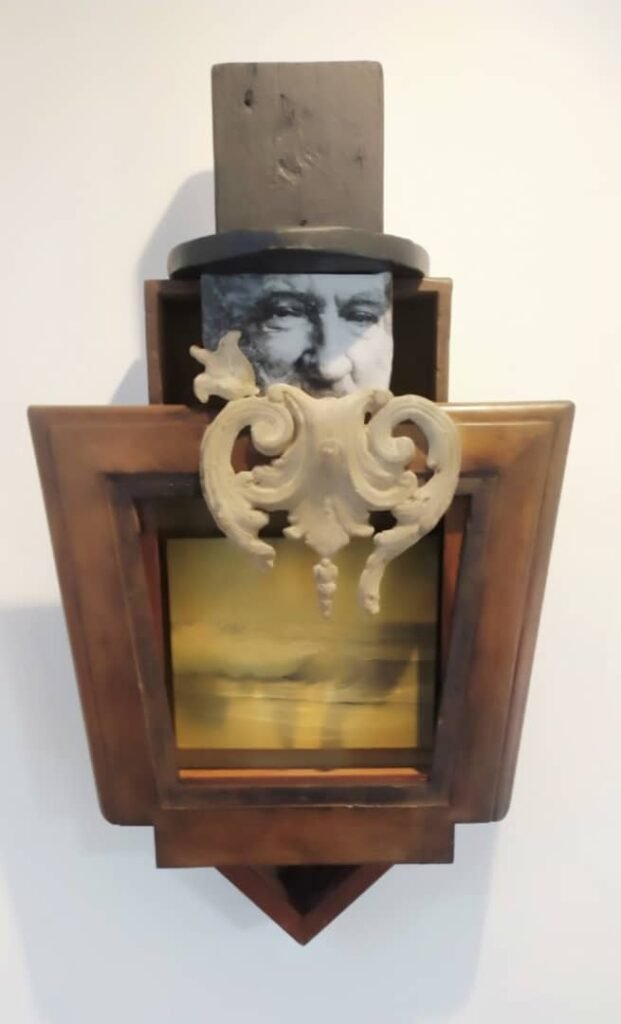
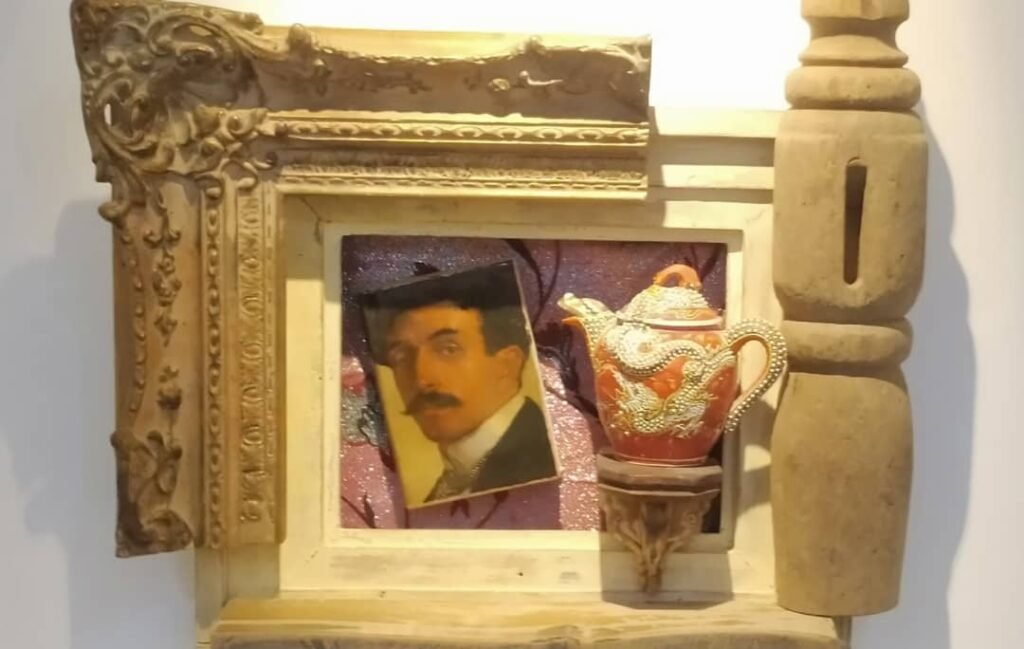
En su más reciente propuesta expositiva, presentada en el Secadero 3 de la Hacienda La Trinidad en Caracas, el espectador no se enfrenta a una acumulación de antigüedades, sino a una sofisticada operación de rescate ontológico. El artista utiliza el ensamblaje no como un fin decorativo, sino como una gramática que articula los restos de una cultura material en retirada. El valor fundamental de esta muestra reside en la transformación del residuo en reliquia. Caviglia toma elementos cuya función utilitaria ha expirado —una moldura astillada, una tetera de dragones, el lomo de un libro de Oscar Wilde— y los inscribe en estructuras que funcionan como «cámaras de resonancia».
En sus composiciones, los elementos parecen haber sido desplazados de un contexto original para habitar un espacio donde el tiempo no se organiza de manera lineal. Nada está allí por su valor material, sino por su capacidad de activar una resonancia. Vista desde la distancia —no solo geográfica—, su trabajo adquiere una intensidad particular, casi una forma de reconocimiento. Como si cada objeto, antes de ser leído, ya hubiese sido vivido.
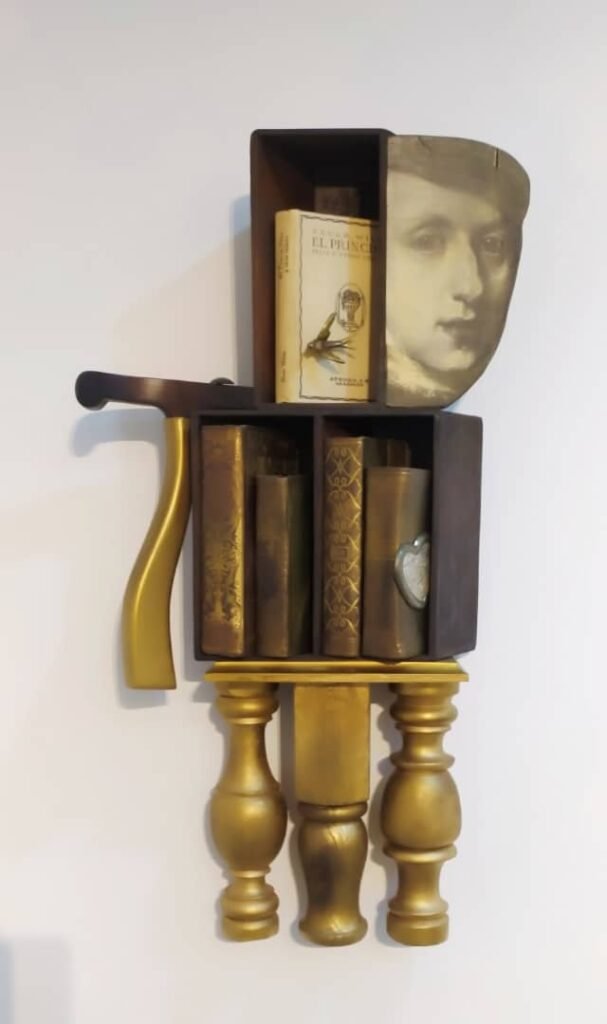
El ensamblaje en Caviglia adquiere una dimensión contenida, casi íntima. No hay aquí el gesto irónico del objeto encontrado; hay, más bien, una voluntad de orden. Muchas de estas piezas funcionan como pequeñas arquitecturas, espacios cerrados donde los objetos coexisten en equilibrio. Esa cualidad escenográfica convierte la obra en un dispositivo de contemplación, que se revela lentamente.
En varias de ellas, la aparición de figuras como Federico Brandt, Armando Reverón u Oscar Wilde introduce una dimensión adicional. No son citas convencionales, sino una forma de arqueología afectiva. Al rodear a Brandt de maderas nobles y porcelanas, el artista convoca esa atmósfera de «interioridad» y silencio doméstico que definió la modernidad venezolana temprana. Con Reverón, el ensamblaje se vuelve más matérico, casi terroso, como si la obra intentara atrapar la luz de Macuto a través de la opacidad de los objetos.
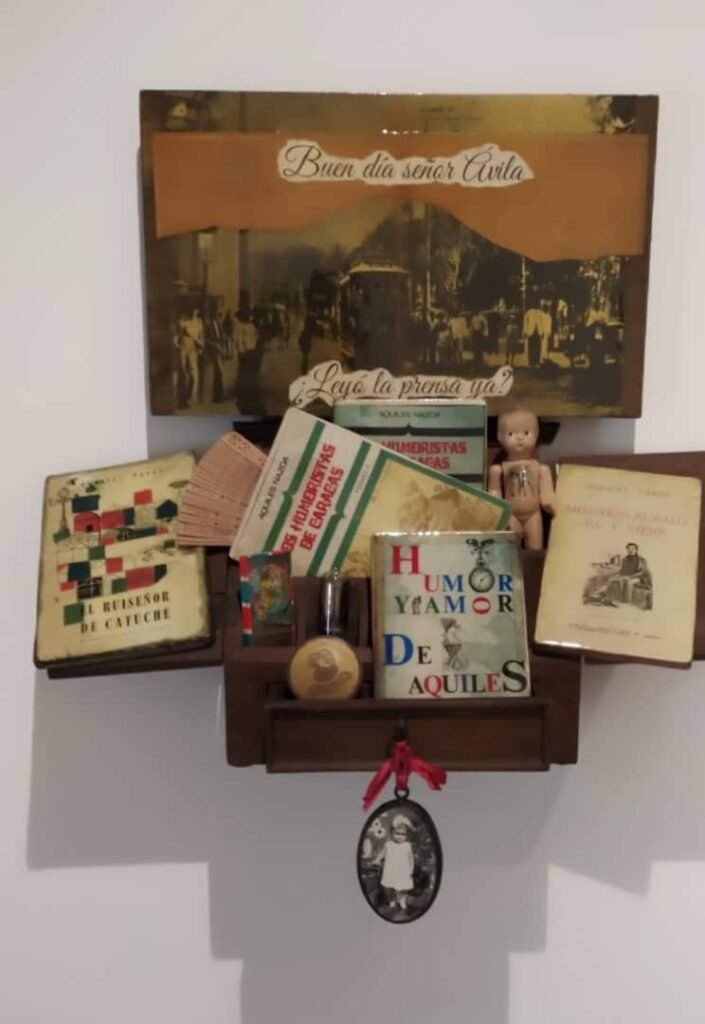
Allí, la pintura, la literatura y el objeto doméstico se integran en un mismo plano: el retrato deja de ser imagen para convertirse en habitante, y el libro —masa escultórica, y una de las columnas de la muestra— deja de ser contenedor para asumir una función estructural. Al intervenir ediciones antiguas, Caviglia subvierte el orden de la lectura por el de la visión. Estas piezas actúan como puentes temporales; el artista «hospeda» a estos maestros en el presente, dándoles un nuevo cuerpo hecho de fragmentos.
Esta muestra confirma que el ensamblaje es, para Caviglia, un acto de resistencia cultural. Frente a la obsolescencia programada y la inmaterialidad de lo digital, estas piezas oponen el peso de la veta y la pátina del tiempo. Hay, además, una cualidad constante: una cierta quietud. Una forma de pausa que suspende la velocidad con la que consumimos las imágenes.
Quizás por eso estas obras no se agotan. Persisten por la manera en que activan una relación con los objetos que no pasa por su utilidad, sino por lo que han sido capaces de contener. Más que transformar los objetos, Caviglia los escucha. Y en ese gesto —tan discreto como insistente— su obra propone una forma distinta de mirar: una que no descarta, que no acelera, y que no olvida del todo.
Jesús Caviglia: Where Objects Remember
In his most recent exhibition in Caracas, Jesús Caviglia transforms discarded objects into structures of memory. Through assemblage, his work proposes a reading in which the material persists as experience and the past is reorganized in the present.
There are artists who work with images; others, with ideas. Jesús Caviglia works with remnants. But not remnants understood as waste, rather as matter charged with time. His work does not consist in accumulating objects, but in reorganizing memory.
In this latest exhibition, presented at Secadero 3 of Hacienda La Trinidad in Caracas, the viewer is not confronted with an accumulation of antiques, but with a sophisticated operation of ontological retrieval. The artist employs assemblage not as a decorative end, but as a grammar that articulates the remains of a material culture in retreat. The fundamental value of this exhibition lies in the transformation of residue into relic. Caviglia takes elements whose utilitarian function has expired—a chipped molding, a dragon-adorned teapot, the spine of a book by Oscar Wilde—and inscribes them into structures that function as “resonance chambers.”
In his compositions, elements seem to have been displaced from an original context to inhabit a space where time is no longer organized linearly. Nothing is there for its material value, but for its capacity to activate resonance. Seen from a distance—not only geographical—his work acquires a particular intensity, almost a form of recognition. As if each object, before being read, had already been lived.
Assemblage in Caviglia takes on a contained, almost intimate dimension. There is no ironic gesture of the found object here; rather, there is a will to order. Many of these pieces function as small architectures, enclosed spaces where objects coexist in equilibrium. This scenographic quality turns the work into a device for contemplation, one that reveals itself slowly.
In several of them, the appearance of figures such as Federico Brandt, Armando Reverón, or Oscar Wilde introduces an additional dimension. These are not conventional references, but a form of affective archaeology. By surrounding Brandt with noble woods and porcelain, the artist evokes that atmosphere of interiority and domestic silence that defined early Venezuelan modernity. With Reverón, the assemblage becomes more material, almost earthy, as if the work sought to capture the light of Macuto through the opacity of objects.
Here, painting, literature, and the domestic object converge on the same plane: the portrait ceases to be an image and becomes an inhabitant, and the book—sculptural mass, and one of the pillars of the exhibition—ceases to be a container to assume a structural function. By intervening in old editions, Caviglia subverts the order of reading in favor of that of seeing. These pieces operate as temporal bridges; the artist “hosts” these masters in the present, giving them a new body made of fragments.
This exhibition confirms that assemblage, for Caviglia, is an act of cultural resistance. Against planned obsolescence and the immateriality of the digital, these works assert the weight of grain and the patina of time. There is also a constant quality: a certain stillness. A form of pause that suspends the speed with which we consume images.
Perhaps that is why these works do not exhaust themselves. They endure in the way they activate a relationship with objects that does not depend on their utility, but on what they have been able to contain. Rather than transforming objects, Caviglia listens to them. And in that gesture—both discreet and persistent—his work proposes another way of seeing: one that does not discard, does not accelerate, and does not entirely forget.
CARACAS D.C VENEZUELA
Abril , 2026
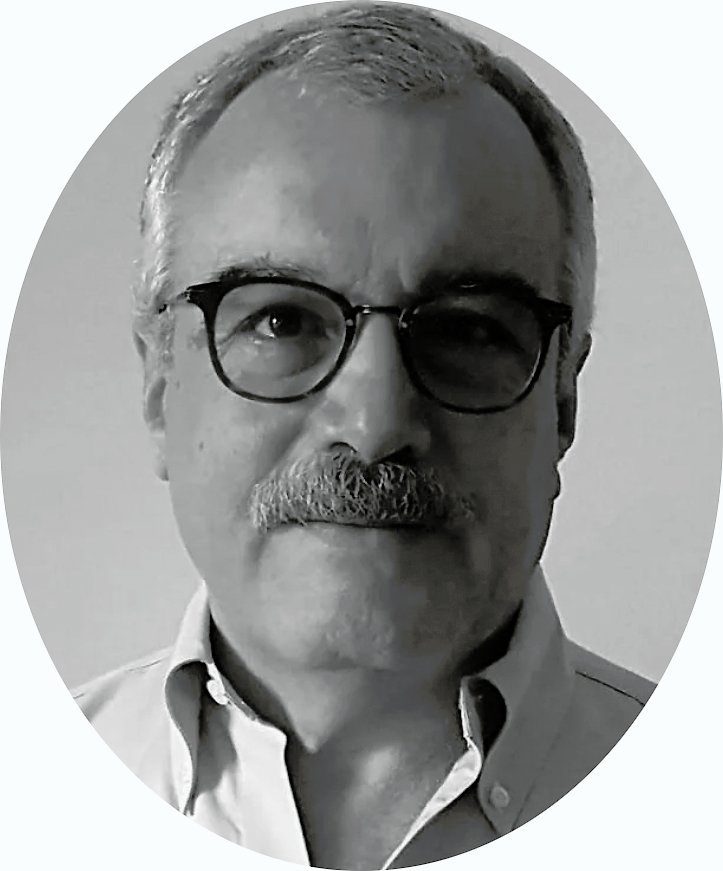
Cesar Sasson
Magíster en Curaduría de Arte
coleccionsasson@gmail.com
@coleccionsasson
Ciudad de Panamá – Panamá
Abril 2026